


Fire-resistant honeycomb cores play a vital role in keeping people safe during construction projects. The demand for fireproof solutions continues to rise, with the global fireproof door core market reaching $1.82 billion in 2024 and projected to grow to $3.26 billion by 2033. Builders use honeycomb panels in fire rated doors and other critical areas to slow the spread of fire and protect lives. The Aluminum Honeycomb Core from Chenshou Tech stands out for its lightweight strength and strict compliance with fire safety standards.
Fire-Resistant Honeycomb Cores and Safety
Why Fire Resistance Matters
Fire can spread quickly in buildings. This creates a serious risk for people and property. Fire resistance is important because it helps slow down the spread of flames and smoke. Builders look for materials that can stand up to high temperatures and keep their strength. Fire-resistant honeycomb cores are one of these materials. They help protect lives and reduce damage during emergencies.
Note: Fire resistance is not just about stopping flames. It also means keeping the structure safe for longer. This gives people more time to escape and helps firefighters do their jobs.
Safety Benefits of Honeycomb Cores
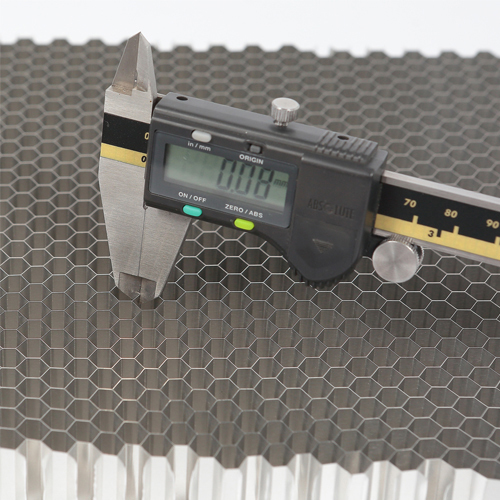
Honeycomb panels use a special design with many small cells. This structure makes them strong and lightweight. The honeycomb shape helps stop fire from moving quickly through walls or doors. Fire-resistant honeycomb cores add another layer of protection. They do not burn easily and keep their shape under heat.
Here are some key safety benefits of honeycomb panels:
- They slow down the spread of fire in buildings.
- They keep doors and walls strong even when exposed to heat.
- They are lighter than many other building materials, making them easier to install.
- They help reduce injuries and save lives during emergencies.
The use of honeycomb panels in construction has grown because of these safety features. Builders trust honeycomb cores to meet strict fire resistance standards. This makes them a smart choice for schools, hospitals, offices, and homes.
Honeycomb Core Structure and Fire Resistance
Hexagonal Design Advantages
The honeycomb core uses a hexagonal pattern that gives it unique fire performance benefits. Each cell in the honeycomb acts as a small barrier, making it harder for fire to move quickly through the panel. This design helps slow down the spread of heat and flames. Scientific studies have shown how this structure works under high temperatures:
- Researchers tested aluminum honeycomb panels using both experiments and computer models.
- The panels kept their strength, especially in smaller sizes, even when exposed to intense heat.
- The temperature on the side away from the fire stayed steady, which means the honeycomb core protected the material behind it.
These results show why fire-resistant honeycomb cores are trusted in construction. The hexagonal design does not just add strength; it also improves fire performance by keeping the structure stable during emergencies.
Non-Combustible Materials Used
Choosing the right non-combustible materials is important for fire safety. Honeycomb cores can be made from several types of materials that do not burn easily. The table below compares common options:
| Type of Honeycomb Core | Properties | Applications |
|---|---|---|
| Nomex (Aramid) Honeycomb | Composed of aramid fiber and resin, chemical-resistant, fire-resistant, resistant to high temperatures | Aircraft interiors, trains, fire-resistant spaces |
| Aluminum Honeycomb Core | High strength-to-weight ratio, corrosion resistant, suitable for high-temperature applications | Aerospace, automotive, marine industries |
| Fiberglass Honeycomb Core | Corrosion-resistant, robust, suitable for electrical insulation | Marine, electric, industrial products |
The Aluminum Honeycomb Core from Chenshou Tech stands out as a lightweight, non-combustible material. It offers excellent fire performance and is easy to install. Builders choose these honeycomb panels for their ability to resist fire and maintain their structure. Using non-combustible materials in honeycomb cores helps protect buildings and people by reducing the risk of fire spreading.
Fire Resistance Testing and Certification
Industry Standards (EN 13501-1, FR A2+)
Testing is a key part of making sure honeycomb panels are safe for use in buildings. Every fire-resistant honeycomb core must pass strict fire test procedures before it can be used in construction. Common methods include the Cone Calorimeter method and Thermogravimetric Analysis (TGA). These tests measure how the material reacts to heat and flames.
Manufacturers must meet important standards to prove their products are safe. The EN 13501-1 and FR A2+ standards are two of the most recognized in the world. The table below shows how honeycomb panels achieve certification:
| Aspect | Details |
|---|---|
| Fire Resistance Ratings | Aluminum honeycomb panels can achieve high fire ratings, such as A2 under the EN 13501-1 standard. |
| Non-combustibility | Aluminum itself is non-combustible, contributing to the fire safety of the panels. |
| Specialized Fireproof Panels | Some manufacturers offer panels that use adhesive-free bonding methods to eliminate combustible components. |
Chenshou Tech Aluminum Honeycomb Core meets and often exceeds these requirements. The product uses fire-retardant treatments and non-combustible materials. This ensures it passes every fire test and provides maximum safety in fire-critical zones.
The table below outlines the main requirements for EN 13501-1 and FR A2+:
| Requirement | Description |
|---|---|
| Regulatory Compliance | A2 grade materials must undergo rigorous testing per EN 13501-1 standards to ensure limited combustibility. |
| Smoke and Toxicity Control | Non-combustible cores and safe adhesives reduce smoke production and toxic gas emissions during combustion. |
| Certified Safety Standards | Rigorously tested and certified by Thomas Bell Wright and IIT Delhi, ensuring compliance with global fire safety norms. |
| Complies with Global Fire Regulations | Fully meets international ISO, ASTM, and EN 13501-1 standards, ensuring superior safety performance. |
| Fire Safety | Non-combustible, low smoke emission, flame spread resistance, enhancing safety compliance. |
Real-World Performance
A fire test in the real world shows how honeycomb panels perform under extreme conditions. Studies have compared different types of sandwich panels. For example, panels with a polyisocyanurate core reinforced with fiberglass fabric were tested with plasterboard and ceramic coatings. The plasterboard-coated system showed better fire resistance and thermal insulation.
Large-scale fire tests also compare honeycomb panels to other materials. The table below shows how different panels react:
| Panel Type | Ignition | Flame Spread | Delamination | Heat Transfer (°C) |
|---|---|---|---|---|
| Honeycomb Panel | Yes | Yes | Yes | N/A |
| ACP Panel Type B | Yes | Yes | N/A | N/A |
| ACP Panel Type A | No | N/A | N/A | 250 |
Honeycomb panels show strong performance in these tests. Their structure helps limit flame spread and maintain strength. Builders trust this material for its proven safety in real fire situations.
Note: Fire-resistant honeycomb cores are tested and certified to meet the highest safety standards. This ensures reliable protection for people and property.
Honeycomb Panels in Fire Rated Doors and Construction
Applications in Walls, Ceilings, and Partitions
Honeycomb panels are widely used in fire rated doors, walls, ceilings, and partitions. These panels help protect buildings from fire by using honeycomb cores made from non-combustible materials like aluminum. The honeycomb structure contains sealed air pockets that act as thermal barriers. This design slows down heat transfer and gives people more time to evacuate during a fire. Honeycomb panels also help prevent structural collapse by keeping their strength under high temperatures. This is important in high-rise buildings and other places where safety is critical.
The table below shows important factors for honeycomb panels in fire rated doors and construction:
| Property/Factor | Description |
|---|---|
| Core Material | Aluminum honeycomb cores are fire-resistant as aluminum does not combust. |
| Surface Sheet Material | The fire resistance varies; aluminum sheets are generally fire-resistant. |
| Core Density | A denser core improves fire resistance by limiting flame spread. |
| Fire Rating Standards | Evaluated by ASTM E84 and UL 723 for flammability and smoke generation. |
Honeycomb panels meet strict fire safety standards and often include fire-retardant treatments. Their use in walls, ceilings, and partitions helps contain fire and protect building occupants.
Comparison with Other Core Materials
Honeycomb cores offer several advantages over traditional materials in fire-prone areas. In fire safety, aluminum honeycomb panels hold an absolute advantage. While stone is non-combustible, it can shatter under high temperatures, causing falling debris that may result in secondary injuries. In contrast, honeycomb panels meet Class A non-combustible standards.
Honeycomb panels, especially those with aluminum honeycomb cores, are non-combustible, do not release toxic fumes, and can slow the spread of fire while maintaining structural integrity. Traditional materials like wood are highly combustible, and stone, while non-combustible, can shatter under high temperatures, posing additional risks.
The table below compares honeycomb cores with other core materials:
| Feature | Honeycomb Cores | Other Core Materials |
|---|---|---|
| Weight | Lightweight, reduces overall system weight | Heavier, may increase overall weight |
| Installation Process | Easier handling due to low density and high strength-to-weight ratio | More complex, may require additional support |
| Fire Resistance | Excellent fire resistance | Varies, may not be as effective |
| Structural Performance | High compressive and shear strength | Generally lower performance |
Honeycomb cores provide a combination of fire resistance, low weight, and strength that makes them ideal for fire rated doors and other safety-focused applications.
Fire-resistant honeycomb cores improve building safety by meeting strict fire standards and slowing fire spread. Their lightweight design makes installation easy and supports sustainable construction. Common uses include fire-rated doors, wall partitions, ceiling systems, and elevator shafts. These panels also enhance thermal and acoustic insulation. The table below highlights their effectiveness in real projects:
| Application Area | Benefits | Market Trends |
|---|---|---|
| Building Facades | Enhance occupant safety, meet fire codes | Growing use in green and energy-efficient buildings |
| Partitions | Lightweight, easy to install | Smart infrastructure investments rising |
| Doors and Ceilings | Improve safety and sustainability | Modular construction gaining popularity |
Chenshou Tech Aluminum Honeycomb Core offers advanced safety and reliability for future construction needs.
FAQ
What makes aluminum honeycomb cores fire-resistant?
Aluminum does not burn. The honeycomb structure slows heat and flame spread. Panels stay strong during fire. Builders use these cores to meet strict fire safety standards.
Where are fire-resistant honeycomb panels used?
Honeycomb panels appear in fire-rated doors, walls, ceilings, and partitions. Builders choose them for schools, hospitals, offices, and homes. Panels protect people and property.
How do honeycomb cores compare to solid cores?
| Feature | Honeycomb Core | Solid Core |
|---|---|---|
| Weight | Lightweight | Heavy |
| Fire Resistance | Excellent | Varies |
| Installation | Easy | Harder |
Honeycomb cores offer better fire resistance and easier installation.
Are aluminum honeycomb cores environmentally friendly?
Aluminum honeycomb cores are fully recyclable. They do not release harmful substances. Builders choose them for green and sustainable projects.
How are honeycomb panels tested for fire safety?
Labs test panels using methods like EN 13501-1. Panels must resist flames and limit smoke. Certified products, such as Chenshou Tech Aluminum Honeycomb Core, meet global fire safety standards.
Post time: Mar-06-2026


