


Selecting the best partition materials for commercial bathrooms depends on durability, maintenance, cost, and long-term value. Chenshou Tech’s Toilet Partition Panel offers a modern solution that combines strength, fireproofing, and moisture resistance. Privacy stands out as a top concern, with many Americans believing Restroom Partition designs lack adequate coverage. Hygiene and comfort also play key roles in bathroom partitions, especially in high-traffic spaces. Aesthetics matter as well, since appealing toilet partitions can enhance the overall atmosphere of any facility.
Partition Materials Overview
Choosing the right partition materials is essential for creating safe, clean, and attractive bathroom spaces. Chenshou Tech Toilet Partition Panel stands out as a modern solution. These panels offer fireproofing, strong moisture resistance, and a wide range of customization options. They fit many commercial bathroom partitions and provide reliable performance in busy environments.
Below is a comparison table showing the characteristics and typical applications of different types of materials used for bathroom partitions:
| Material | Characteristics | Applications |
|---|---|---|
| Steel | Durable, affordable, easy to clean, low moisture vulnerability | Commercial spaces, offices, schools |
| Phenolic | Tough, moisture-resistant, impact-resistant, surface wear possible | High-traffic areas, airports, stadiums |
| HDPE | Moisture-resistant, impact-resistant, graffiti-resistant, long-lasting | Facilities with heavy use, gyms, public restrooms |
| Honeycomb Core | Lightweight, strong, good insulation, robust designability | Areas needing lightweight partitions |

Steel Bathroom Partitions
Steel is one of the most common partition materials for bathroom partitions. It offers durability and affordability. Powder-coated steel partitions last about 10-15 years, while stainless steel can last over 20 years. Steel is easy to clean and resists moisture, making it suitable for commercial bathroom partitions in offices and schools. However, steel can be prone to dents in high-traffic areas.
Phenolic Partition Materials
Phenolic bathroom partitions are known for toughness and moisture resistance. They perform well in high-traffic areas like airports and stadiums. Phenolic partitions can last more than 20 years. They resist impact but may show surface wear over time. Careful cleaning is important because harsh chemicals can cause warping or discoloration. Phenolic partitions are a good choice for facilities needing durable partition materials.
HDPE Toilet Partitions
HDPE plastic bathroom partitions are popular for their impact resistance and moisture protection. HDPE partitions withstand heavy use and resist graffiti. They are ideal for gyms, schools, and public restrooms. HDPE offers excellent durability, lasting over 20 years. These partition materials are easy to maintain and clean, making them a smart choice for busy facilities.
Honeycomb Core Partitions
Honeycomb core partitions use lightweight polypropylene mesh. They provide strong insulation and robust designability. Honeycomb partitions are suitable for areas needing lightweight bathroom partitions. They offer good impact resistance and heat insulation. These partition materials work well in spaces where weight and easy installation matter.
Tip: Customization options, such as colors and sizes, are available with Chenshou Tech Toilet Partition Panel, making it easy to match any bathroom design.
Durability and Strength Comparison
Steel vs. Phenolic
Steel partitions are common in commercial bathrooms. Stainless steel bathroom partitions offer a sleek look and are easy to clean. However, steel can dent and scratch, especially in high-traffic areas. These dents may reduce the strength and durability of the partition over time. Phenolic partitions use layers of resin-saturated craft paper. This construction gives them excellent strength and durability. Phenolic partitions resist vandalism and impacts better than steel. They are often chosen for places where vandalism is a concern, such as schools and public restrooms. Phenolic partitions also maintain their load-bearing capacity longer than steel. Chenshou Tech’s compact laminate panels provide similar fireproofing and impact resistance, making them a reliable choice for demanding environments.
Note: Phenolic partitions are ideal for facilities that need robust partitions with high resistance to wear and tear.
HDPE vs. Honeycomb
HDPE partitions are designed for strength and durability. HDPE is waterproof and graffiti-resistant. It will not rust, swell, or delaminate, even in humid restrooms. HDPE partitions are highly durable and impact-resistant. They require little maintenance and perform well in high-moisture environments like gyms and stadiums. Honeycomb partitions are lightweight and strong. They offer good insulation and are easy to install. However, honeycomb partitions may not match the impact resistance of HDPE. HDPE stands out for its ability to withstand heavy use and maintain its appearance over time. Chenshou Tech’s fireproof panels also deliver reliable performance in areas with frequent use.
- HDPE is suitable for bathrooms that demand high sanitation and durability.
- Honeycomb partitions work best in spaces where weight and easy installation matter.
Tip: When choosing partition materials, consider the expected traffic and moisture levels in your facility.
Maintenance and Hygiene
Cleaning Steel Partitions
Steel partitions are easy to clean and maintain. Regular cleaning helps prevent rust and keeps the surface hygienic. The cleaning solution depends on the level of soiling. For light soiling, use a mild detergent or ammonia-based solution. Moderate soiling requires a mix of detergent, water, and a solvent like acetone. Heavy soiling calls for a metal cleaner or a slightly abrasive powder. Graffiti removal needs a special remover. Avoid bleach, hydrochloric acid, and steel wool. Always dry the surface after cleaning to prevent moisture buildup. The table below shows recommended cleaning protocols:
| Level of Soiling | Recommended Cleaning Solution |
|---|---|
| Light Soiling | Mild Detergent or ammonia based solution |
| Moderate Soiling | Detergent, water, and solvent like acetone or kerosene |
| Heavy Soiling | Metal cleaner, slightly abrasive powder like Ajax |
| Graffiti | Special graffiti remover |
| Precautions | Avoid bleach, steel wool; dry surface after cleaning |
Phenolic in Humid Environments
Phenolic partitions perform well in humid environments. They resist mold and mildew, making them ideal for areas with high moisture. These partitions are highly resistant to chemicals and maintain their durability even when exposed to frequent cleaning. Phenolic partitions are easy to clean and impervious to moisture. Facilities with wet conditions often choose phenolic partitions for their reliability and hygiene.
- Phenolic partitions resist mold and mildew.
- They are easy to clean and suitable for humid spaces.
- Their durability makes them a smart choice for high-moisture areas.
HDPE Maintenance Benefits
HDPE partitions offer excellent maintenance benefits. They are easy to clean and withstand moisture without rusting or swelling. HDPE partitions show significant antibacterial properties. They reduce bacteria such as MRSA and a.baumannii on their surfaces. These partitions also decrease viral activity, including Influenza and Human Coronavirus, within 24 hours. HDPE partitions are ideal for bathrooms that require high sanitation and durability. Chenshou Tech’s panels are easy to process and maintain, making them a practical solution for busy facilities.
Honeycomb Panel Care
Honeycomb partitions are easy to clean and lightweight. They resist moisture and provide good insulation. These panels are suitable for spaces where weight and installation speed matter. Honeycomb partitions offer robust designability and are easy to clean with standard methods. They resist graffiti and maintain their appearance with minimal effort. Chenshou Tech’s panels support easy maintenance and processing, ensuring long-lasting performance.
Tip: Choosing partitions that are easy to clean and resist moisture helps maintain hygiene and reduces maintenance costs.
Cost and Value in Commercial Bathroom Partitions

When choosing bathroom partitions, cost and value play a major role. The right material can save money over time, especially in busy places with heavy use. Below is a comparison of initial and long-term costs for common partition materials:
| Material | Durability | Maintenance Needs | Initial Cost | Long-term Benefits |
|---|---|---|---|---|
| Phenolic | Good | Moderate | Lower | Long-term savings due to durability |
| HDPE | Excellent | Low | Moderate | Minimal upkeep needs leading to savings |
| Stainless Steel | Excellent | Low | Higher | Long-term durability and hygiene benefits |
| Honeycomb | Moderate | Moderate | Lower | Cost-effective but less durable than others |
Steel Partition Pricing
Steel bathroom partitions are popular for their solid build and affordability. The price depends on several factors, such as materials, installation costs, and design. Standard bathroom stalls cost less than custom commercial bathroom stalls with extra features. Stainless steel has a higher initial cost but offers long-lasting value and low maintenance. The table below shows the main factors that influence steel partition pricing:
| Factor | Description |
|---|---|
| Materials | Type of steel used, from budget to premium options |
| Installation Costs | Labor and complexity of setting up the stalls |
| Design and Configuration | Standard or custom bathroom stalls |
| Additional Features | Extras like locks, handles, or privacy upgrades |
| Maintenance and Longevity | Higher upfront cost can mean lower costs over the life of the bathroom partitions |
Phenolic Cost Factors
Phenolic bathroom partitions offer good durability and moderate maintenance needs. The cost can change based on design complexity and customization. For example, digitally printed panels or unique finishes can raise installation costs by 15-25%. Thicker panels and special finishes also affect the price. Phenolic partitions are a smart choice for facilities that want long-lasting bathroom stalls with a modern look.
- Customization and design choices increase costs.
- Thicker panels and special finishes add value and durability.
HDPE Long-Term Value
HDPE plastic bathroom partitions stand out for their excellent durability and low maintenance. These partitions resist moisture, graffiti, and bacteria, making them ideal for commercial bathroom stalls in schools, gyms, and public spaces. HDPE solid plastic partitions may cost more at first than honeycomb, but their minimal upkeep and long-lasting performance lead to overall value. Facilities with heavy use often choose HDPE for its functionality and savings over time.
- HDPE solid plastic partitions reduce repair and cleaning costs.
- Their long-lasting nature makes them a top pick for busy bathrooms.
Honeycomb Cost Efficiency
Honeycomb bathroom partitions are lightweight and cost-effective, especially for large projects. The price per square meter drops as the order size increases. For example, buying over 3,000 square meters can lower the price to $10.50 per square meter. This makes honeycomb a good choice for projects needing many bathroom stalls at a lower cost.
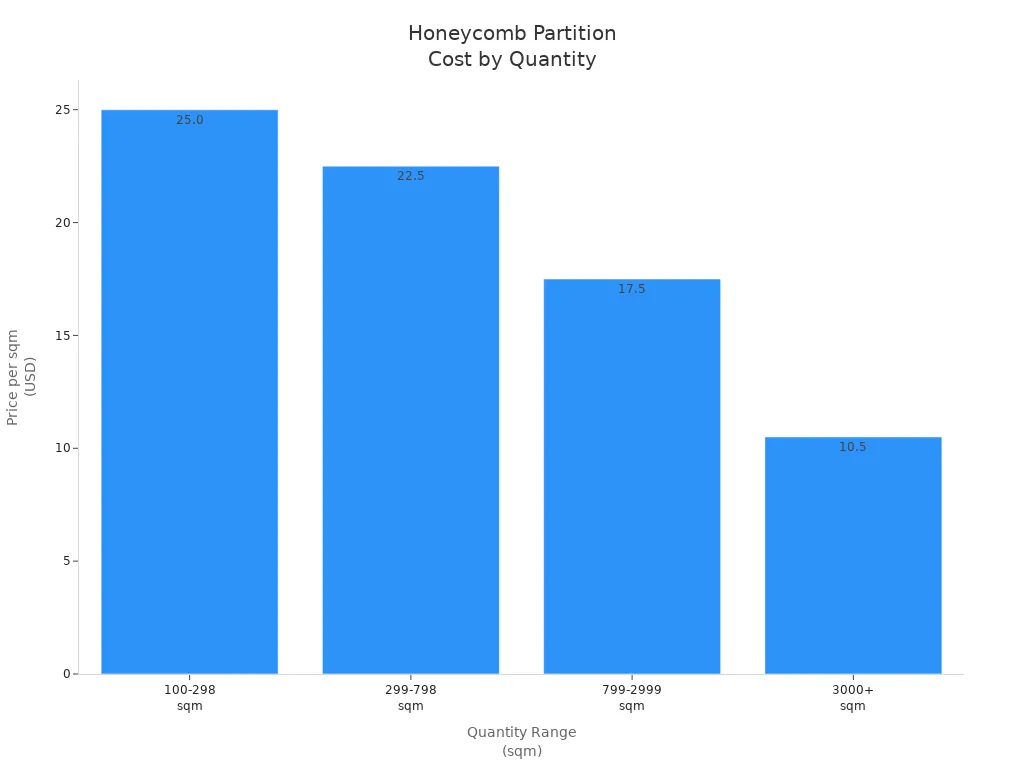
Tip: Chenshou Tech offers affordable, customizable bathroom partitions that fit any design and budget. Their panels provide long-lasting performance and easy installation, making them a smart investment for commercial bathroom partitions.
Environmental and Sustainability Factors
Recyclability of Partition Materials
Recyclability plays a major role in the environmental impact of restroom partitions. Many modern partitions use materials that can be recycled after their service life. HDPE and phenolic partitions are known for their recyclability. These materials help reduce landfill waste and support a circular economy. Honeycomb partitions, especially those made from polypropylene or bamboo, also offer recycling benefits. Steel partitions have limited recyclability but can be repurposed in some cases. Choosing recyclable restroom partitions helps facilities meet sustainability goals and reduce their environmental footprint.
Note: Chenshou Tech’s panels use environmentally friendly materials that support recycling and easy processing.
Eco-Friendly Features of HDPE and Phenolic
HDPE and phenolic partitions stand out for their eco-friendly features. Manufacturers highlight several key benefits:
- Durability extends the lifespan of restroom partitions, reducing replacement needs.
- Fire resistance improves safety in public spaces.
- Low emissions help maintain indoor air quality.
- Recyclability supports sustainable building practices.
These features make HDPE and phenolic partitions a smart choice for restroom projects that prioritize environmental responsibility. Facilities can rely on these materials to create safe, hygienic, and sustainable restroom environments.
Honeycomb and Steel Sustainability
Honeycomb partitions use bamboo, an annually renewable material, which supports sustainability goals. These partitions are suitable for projects targeting certifications like LEED and GreenStar. Honeycomb materials offer excellent insulation, reducing energy use in restroom spaces. Lightweight panels lower transportation costs and emissions. Steel partitions consume more resources and produce higher emissions, but their durability can offset some environmental concerns.
| Attribute | Honeycomb Materials (Polypropylene and Bamboo) | Steel Partitions |
|---|---|---|
| Reduced Environmental Impact | Significant reduction in resource consumption and greenhouse gas emissions | Higher resource consumption and emissions |
| Energy Efficiency | Excellent insulation properties, reducing energy use | Generally less efficient |
| Transportation Costs | Lightweight, leading to lower costs and emissions | Heavier, increasing costs and emissions |
| Longevity and Durability | Requires less maintenance and replacement | May require more frequent maintenance |
| Recyclability | Can be recycled, contributing to a circular economy | Limited recyclability |
Honeycomb partitions align with green building certification programs and offer credible renewable fiber content. Chenshou Tech provides restroom partition panels that meet environmental standards and offer reliable after-sales support. These panels help facilities create sustainable restroom spaces while maintaining performance and style.
Choosing the Best Toilet Partition Material
Factors for Commercial Bathrooms
Selecting the right material for bathroom partitions requires careful consideration of several important factors. Facility managers and architects often focus on these priorities:
- Durability: Materials must withstand frequent use, moisture, scratches, and vandalism. High-traffic areas demand strong partitions.
- Fire Classification: Safety is crucial. Fire-resistant materials like powder-coated steel and phenolic panels offer protection.
- Cost: Both initial and long-term costs matter. Some partitions may be affordable upfront but require more maintenance over time.
- Longevity: Choose partitions that keep their appearance and performance for many years. Stainless steel and solid plastic are reliable options.
- Sustainability: Materials that support environmental goals and certifications, such as LEED, are preferred.
- Appearance: Design flexibility allows for a range of colors and textures. Customization helps match the facility’s style.
- Regulations & Code Compliance: Ensure partitions meet ADA and OSHA standards for public restrooms.
Tip: Chenshou Tech offers bathroom partitions with strong durability, fireproofing, and moisture resistance. Their panels can be customized for color, size, and privacy options, making them suitable for many commercial settings.
Steel partitions offer strength and affordability. Phenolic panels provide toughness and moisture resistance. HDPE stands out for hygiene and durability. Honeycomb materials are lightweight and cost-effective. Consider your needs for privacy, cleanliness, and budget before choosing. Environmental impact and long-term value matter for every project. For a reliable and customizable solution, trust Chenshou Tech to deliver high-quality bathroom partition panels for any commercial space.
FAQ
What is the most durable partition material for commercial bathrooms?
Steel and HDPE offer high durability. HDPE resists moisture and impact. Steel provides strength and longevity. Both materials perform well in busy environments.
How do I clean bathroom partitions to prevent mold and bacteria?
Use mild detergent and water for regular cleaning. HDPE and phenolic resist mold and bacteria. Dry surfaces after cleaning to reduce moisture buildup.
Can bathroom partitions be customized for color and size?
Yes. Many manufacturers, including Chenshou Tech, offer customization. You can choose colors, sizes, and accessories to match your bathroom design.
Are partition materials environmentally friendly?
HDPE and phenolic are recyclable. Honeycomb panels use renewable materials like bamboo. Chenshou Tech panels feature eco-friendly options for sustainable projects.
Post time: Feb-08-2026


