


Full-height and zero-gap partitions are essential when designing for privacy in modern restroom environments, effectively eliminating sightlines and unwanted gaps. Many restroom users express concerns that stalls do not offer adequate privacy. Research indicates that 70% of respondents feel exposed, while 58% desire the removal of gaps around stall doors and walls. Common challenges faced include budget constraints, limited space, and outdated building codes.
“Privacy is another concern. Many stalls lack sufficient barriers, leaving women feeling exposed and vulnerable.”
Innovative materials and customizable solutions, such as Toilet Partitions, empower facilities to create secure and comfortable environments for all users.
Designing for Privacy in Restrooms

Eliminating Sightlines
Designing for privacy in restrooms starts with eliminating sightlines. Many users feel uncomfortable when gaps or openings allow others to see inside stalls. A survey found that 72% of Americans believe restroom stalls do not provide enough privacy. Most people prefer partitions that reach from the floor to the ceiling. These designs remove sightline gaps and make users feel more secure.
Modern restroom partitions use several strategies to block sightlines:
- Floor-to-ceiling panels that cover the entire stall height.
- Gap-free connections between doors and walls.
- Minimal gap designs with tolerances as tight as 1/8 inch.
The table below shows common design strategies for eliminating sightlines:
| Design Strategy | Description |
|---|---|
| Gap-free partitions | Removes gaps between doors and walls, improving privacy and appearance. |
| Maximum-height partitions | Uses tall panels with interlocking edges to block all sightlines. |
| Floor-to-ceiling partitions | Extends panels from the floor to the ceiling for complete privacy. |
Using high-quality material, such as compact laminate or HDPE plastic, also helps reduce sightlines. These materials allow for precise cuts and tight fits, which are important for commercial restroom design. Facilities that focus on eliminating sightlines show a strong commitment to user comfort and safety.
Enhancing User Comfort and Brand Image
User comfort is a key goal in commercial restroom design. When people feel exposed, they may avoid using the restroom or feel stressed. Some users report discomfort when they must ask for access to a restroom, which can affect their dignity. Lack of privacy can be especially hard for people who care for children or others.
A restroom that offers privacy makes users feel respected and valued. This positive experience encourages them to return to the facility. For businesses, a comfortable restroom can improve their brand image. Customers remember clean, private, and well-designed restrooms. They are more likely to recommend or revisit a place that invests in modern restroom partitions.
Designing for privacy is not just about blocking sightlines. It also means choosing the right material, color, and accessories to match the overall design. A good solution combines function and style, making the restroom both practical and attractive. In commercial spaces, this attention to detail can set a business apart from its competitors.
Partition Types and Privacy Solutions
Full-Height Partition Features
Full-height partitions are a leading solution when designing for privacy in restrooms. These partitions reach from the floor to the ceiling, blocking sightlines and providing improved privacy. Many commercial spaces use full-height partitions to create a secure environment. The privacy features include sound control and visual separation. The table below compares full-height partitions with partial-height partitions:
| Feature | Full-Height Partitions | Partial-Height Partitions |
|---|---|---|
| Privacy | Maximum privacy and sound control | Some privacy without complete isolation |
| Sound Control | High sound transmission class ratings | Limited sound control |
| Visual Separation | Complete visual separation | Partial visual separation |
Chenshou Tech’s Toilet Partition Panel uses durable materials like compact laminate and high-pressure fireproof decorative panels. These materials resist moisture, fire, and impact, making them ideal for modern restroom partitions. Customization options allow for a seamless fit and integration with any design.
Zero-Gap and Zero-Sightline Systems
Zero sightline designs eliminate gaps between panels, doors, and edges. This system uses concealed fasteners and continuous edge design to ensure privacy maintained. The flush-fit design prevents visibility between stalls. Integrated privacy hardware keeps the appearance clean and secure. The table below highlights key features of zero sightline systems:
| Feature | Description |
|---|---|
| Concealed Fasteners | Hidden hardware creates a seamless look |
| Gap Elimination | Engineered to close all gaps, blocking any view |
| Continuous Edge Design | Tight, gap-free fit prevents visibility |
| Integrated Alignment | Precise alignment eliminates misalignment and sightlines |
| Flush-Fit Design | Panels and doors fit flush, preventing viewing between stalls |
| Integrated Privacy Hardware | Hardware blends with the system, maintaining privacy |
Zero sightline designs also improve hygiene. Cleaner surfaces mean less dirt and bacteria accumulate.
Comparison with Standard Partitions
Standard partitions often leave small gaps and sightlines, reducing privacy. Full-height and zero sightline partitions offer improved privacy and hygiene. High-end toilet partitions use advanced materials and design for better performance. The table below compares zero-gap systems with traditional partitions:
| Feature | Zero-Gap Systems | Traditional Partitions |
|---|---|---|
| Sightlines | Eliminated, enhancing privacy | Often present, reducing privacy |
| Gaps | Closed, preventing visibility | Small gaps present, allowing visibility |
| Hygiene | Cleaner, less accumulation of dirt | Difficult to clean, traps dirt and bacteria |
| User Experience | Higher standard of privacy | Lower standard of privacy |
Chenshou Tech’s solution stands out for its durability, customization, and accessory options. The use of advanced materials ensures privacy maintained and long-lasting performance in commercial environments.
Practical Considerations
Installation and Cost Factors
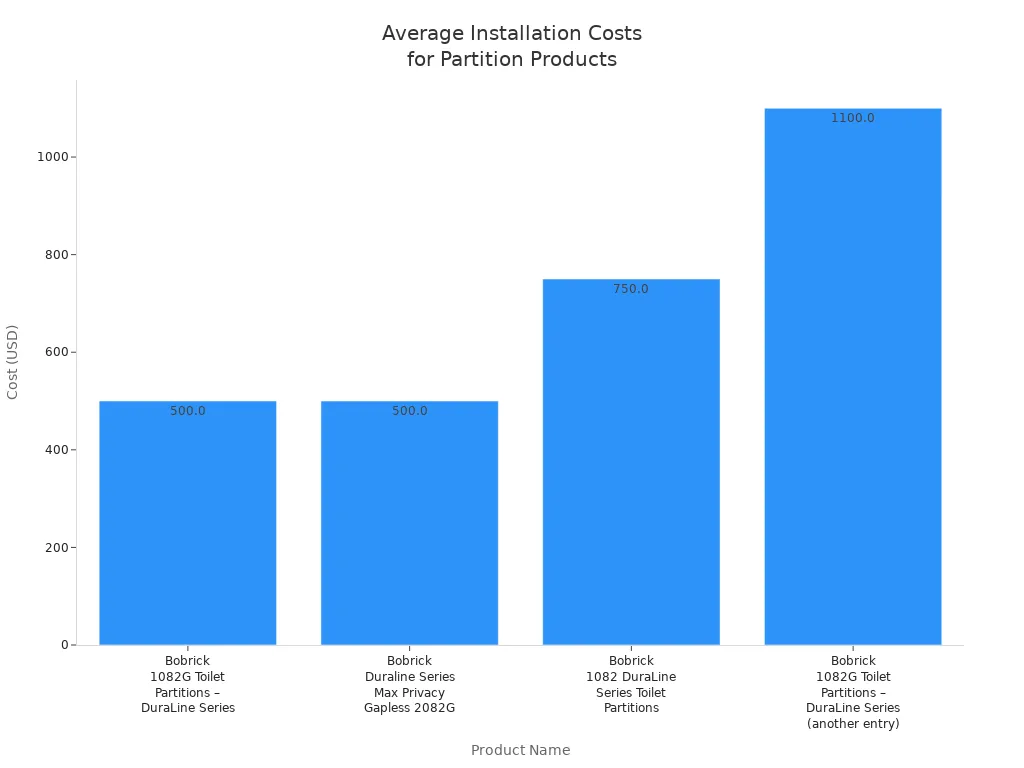
Installation costs for full-height and zero-gap partitions can vary based on product type and project needs. The table below shows the average installation costs for several commercial restroom partition products:
| Product Name | Cost |
|---|---|
| Bobrick 1082G Toilet Partitions – DuraLine Series | $500.00 |
| Bobrick Duraline Series Max Privacy Gapless 2082G Toilet Partitions | $500.00 |
| Bobrick 1082 DuraLineSeries Toilet Partitions | $750.00 |
| Bobrick 1082G Toilet Partitions – DuraLine Series (another entry) | $1,100.00 |
Several factors influence the total cost of installing modern restroom partitions. Material selection plays a major role in both initial and long-term expenses. Installation complexity, maintenance requirements, and design considerations also affect the final price. Choosing the right solution helps balance cost and performance.
| Factor | Description |
|---|---|
| Material Selection | The choice of materials affects both initial costs and long-term value. |
| Installation Complexity | Installation methods and the need for specialized labor can influence overall expenses. |
| Maintenance Requirements | The ease of maintenance can impact long-term costs and the choice of materials. |
| Design Considerations | Design choices, including partition height and mounting methods, affect privacy and aesthetic, influencing costs. |
Maintenance and Durability
Durability is a key factor in designing for privacy. Different materials offer varying levels of strength and resistance. Phenolic panels are incredibly durable and resist vandalism and moisture. Stainless steel is easy to clean but does not perform as well in high-moisture areas. Solid plastic HDPE is robust, low-maintenance, and water-resistant.
| Material | Durability | Vandalism Resistance | Moisture Resistance |
|---|---|---|---|
| Phenolic Panels | Incredibly durable, long-lasting | Highly resistant to vandalism | Highly resistant to moisture |
| Stainless Steel | Durable, easy to clean | Resistant to vandalism | Not well-suited for high moisture |
| Solid Plastic HDPE | Robust, low-maintenance | Durable, resistant to scratches | Inherently resistant to water |
To maximize the lifespan of restroom partitions, follow these maintenance practices:
- Regular dusting and cleaning with a soft cloth.
- Protect against direct sunlight to prevent fading.
- Avoid excessive moisture and wet cleaning methods.
- Apply polish every few months.
- Fix scratches and dents promptly.
- Check for structural integrity.
- Use gentle cleaning products.
Compliance and Accessibility
Compliance with building codes and accessibility standards is essential for any commercial restroom project. ADA compliance requires specific compartment sizes, door swings, grab bars, and toe clearance. The table below outlines key requirements:
| Requirement Type | Specification Details |
|---|---|
| Wheelchair-accessible compartment | 1676 x 1676 mm (66 x 66 in.) interior; 1422 x 1524 mm (56 x 60 in.) clear floor space; 1.5 m (5 ft) deep and 2.4 m (8 ft) long alcove layout with 1524 mm (60 in.) turning space. |
| Ambulatory-accessible compartment | Minimum depth of 1524 mm (60 in.); width between 890 to 940 mm (35 to 37 in.); doors must swing out and be self-closing. |
| Grab bars | Required on both sides of the toilet. |
| Toe clearance | At least 230 mm (9 in.) above the finish floor; must extend 150 mm (6 in.) beyond the compartment-side face. |
Fire safety compliance is also important. Partitions must meet fire resistance ratings, use fire-resistant materials, and include proper seals and doors. Regular maintenance ensures ongoing compliance. Integrated touchless locks can further improve hygiene and meet modern standards.
Note: Always check local codes and regulations to ensure full compliance for your restroom design.
Design and Aesthetics
Material and Finish Choices
Selecting the right material is essential for both privacy and appearance in restroom partitions. In commercial settings, designers often choose from several popular options. The table below highlights common materials and their features:
| Material | Description |
|---|---|
| Solid Phenolic | Water-resistant, impact-resistant, and available in rich finishes. |
| Compact Laminate (HPL) | Offers a variety of stylish designs, from woodgrains to concrete textures. |
| Tempered Glass | Used in modern restrooms for a sleek, upscale look. |
Each material offers unique benefits. Solid phenolic and compact laminate provide durability and a wide range of finishes. Tempered glass creates a modern look but may require more careful maintenance. The finish also affects how easy it is to keep partitions clean and looking new.
- Plastic partitions are easy to clean with mild solutions, which helps prevent dirt and bacteria build-up.
- These materials can last for decades with proper care, making them a cost-effective choice.
- Unlike wood, plastic does not rot or warp, especially in humid environments.
- Plastic is lighter and does not rust, unlike metal.
- Glass looks elegant but needs careful maintenance and is more prone to shattering.
Customization and Branding
Customization allows facilities to match restroom partitions with their overall design goals. Modern partitions can feature sleek materials and custom finishes. Bold colors and unique textures help create inviting spaces. Some manufacturers offer custom prints or patterns to support branding.
- A well-designed partition with a logo or brand colors leaves a lasting impression on visitors.
- Partitions help define functional zones in compact spaces without major renovations.
- Physical brand elements like custom partitions provide ongoing exposure at no extra cost.
- A branded environment sets a facility apart from competitors.
- Modular systems allow for easy updates or expansion as needs change.
Thoughtful customization in commercial restrooms supports both user comfort and brand identity.
Choosing the Right Solution
Assessing Space Needs
Facility managers must consider several factors when choosing the right solution for restroom partitions. Each commercial restroom has unique requirements based on space, traffic, and privacy expectations. The table below outlines important criteria for assessing space needs:
| Criteria | Description |
|---|---|
| Project Requirements | Review the size of the restroom, expected number of users, and privacy needs. |
| Material Quality and Durability | Select materials that last, such as compact laminate or stainless steel. |
| Customization Options | Choose colors, finishes, and mounting styles that match the overall design. |
| Installation Support | Work with companies that offer clear guidance and support during installation. |
| Cost Considerations | Balance the budget with long-term value and maintenance costs. |
| Past Projects and Reputation | Check the supplier’s experience and customer feedback. |
| Environmental Sustainability | Look for eco-friendly materials and manufacturing practices. |
Space constraints can affect the choice between full-height and standard partitions. Full-height partitions offer higher privacy and can be customized to fit different layouts. They also help create cleaner and healthier restrooms.
Working with Suppliers
Collaboration with suppliers is key to a successful restroom project. Suppliers should offer a range of materials and mounting options to meet different needs. Engaging in design workshops with architects and facility managers can lead to better solutions. Understanding the needs of users helps guide the design process.
Chenshou Tech stands out for its customer service and support. The company provides expert guidance during installation, making the process smooth and efficient. After installation, Chenshou Tech offers free follow-up service to ensure customer satisfaction. This level of support helps facility managers feel confident in their choice.
Tip: Always communicate your project goals and ask for samples or references before making a final decision.
Choosing the right solution for restroom partitions involves careful planning, supplier collaboration, and a focus on long-term value. With the right partner, any commercial restroom can achieve both privacy and style.
Full-height and zero-gap partitions offer many benefits for commercial restrooms:
- They improve privacy by removing sight lines and gaps.
- These partitions meet strict durability standards and support a cohesive design.
- High-quality, customizable panels ensure compliance, reduce maintenance, and increase comfort for guests.
- Facilities gain better hygiene, noise reduction, and efficient space use.
Choosing solutions like Chenshou Tech’s panels helps build a positive brand image and long-term value. For the best results, consult experts to create tailored restroom solutions.
FAQ
What are full-height restroom partitions?
Full-height partitions extend from the floor to the ceiling. They block sightlines and sound. These partitions offer maximum privacy in public restrooms.
How do zero-gap partitions improve privacy?
Zero-gap partitions remove spaces between doors and panels. This design prevents people from seeing into stalls. It also helps keep restrooms cleaner.
Can Chenshou Tech’s Toilet Partition Panels be customized?
Yes! Chenshou Tech offers panels in many colors and sizes. You can choose finishes and accessories to match your restroom’s style.
Are these partitions easy to clean and maintain?
- Compact laminate panels resist water, fire, and stains.
- Wipe surfaces with a soft cloth and mild cleaner.
- Regular checks keep partitions looking new.
Post time: Mar-05-2026


