


As businesses modernize facilities and prioritize user experience, commercial restroom interiors are no longer afterthoughts—these essential spaces now reflect operational excellence, aesthetics, and brand values. For architects, facility managers, and procurement professionals in the U.S., understanding market trends in Toilet Partitions is critical to making informed decisions that balance functionality, compliance, and design impact.
In 2026, the commercial restroom partition market continues to evolve with innovations in materials, privacy solutions, and smart technology. Global forecasts anticipate substantial growth in restroom partition solutions, driven by commercial construction and retrofit demand across offices, hospitality, and education segments.
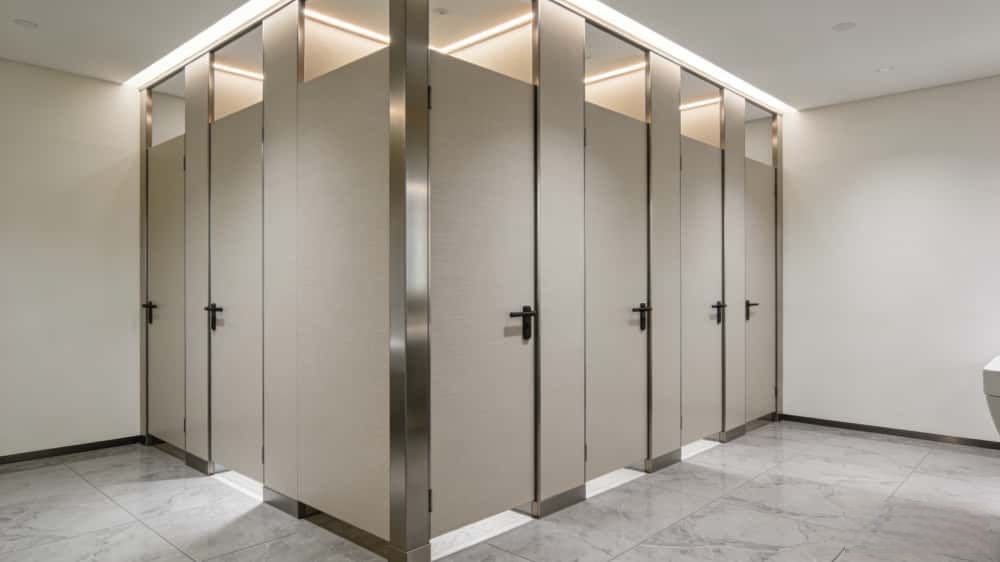
1. Latest Trends: Materials, Privacy, and Smart Tech
A key driver shaping today’s commercial bathrooms is the demand for durable, sustainable, and hygienic restroom partition systems that serve both performance and design goals.
Eco-Friendly and High-Performance Materials
Sustainability continues to be a dominant theme. In the commercial partitions space, materials with environmental and operational benefits are gaining traction:
High-density polyethylene (HDPE) and solid phenolic panels: renowned for moisture resistance, impact durability, and low maintenance—ideal for high-traffic commercial settings.
Recycled content and low-VOC finishes: address green building standards and indoor air quality concerns while appealing to eco-conscious clients.
Custom surfaces and finishes: allow cohesive integration with broader facility aesthetics—whether for corporate headquarters or luxury hospitality venues.
Your commercial partners can achieve all these benefits with customizable Restroom Partition solutions designed for durability and visual appeal.
Enhanced Privacy and Full-Height Solutions
Modern users expect privacy, comfort, and dignity in every restroom visit. That’s why floor-to-ceiling partition systems and zero-sightline designs are among the fastest-growing trends. These configurations eliminate sight gaps between panels and doors, offering a more exclusive, upscale restroom environment.
Full-height partitions provide superior acoustic control and a visually seamless experience.
Applications range from executive office restrooms to premium hotel washrooms where brand image is paramount.
Integration of Smart Technology
Technology continues to redefine how restrooms function and perform:
Occupancy sensors and digital indicators improve user experience and help reduce queuing.
Touchless enhancements increase hygiene and reduce maintenance workload, especially when paired with smart fixtures like sensor faucets and automatic dispensers.
Data-driven insights from IoT devices support predictive cleaning schedules and resource usage monitoring.
These innovations not only elevate facility operations but also contribute to cost savings and safer, more efficient restrooms.
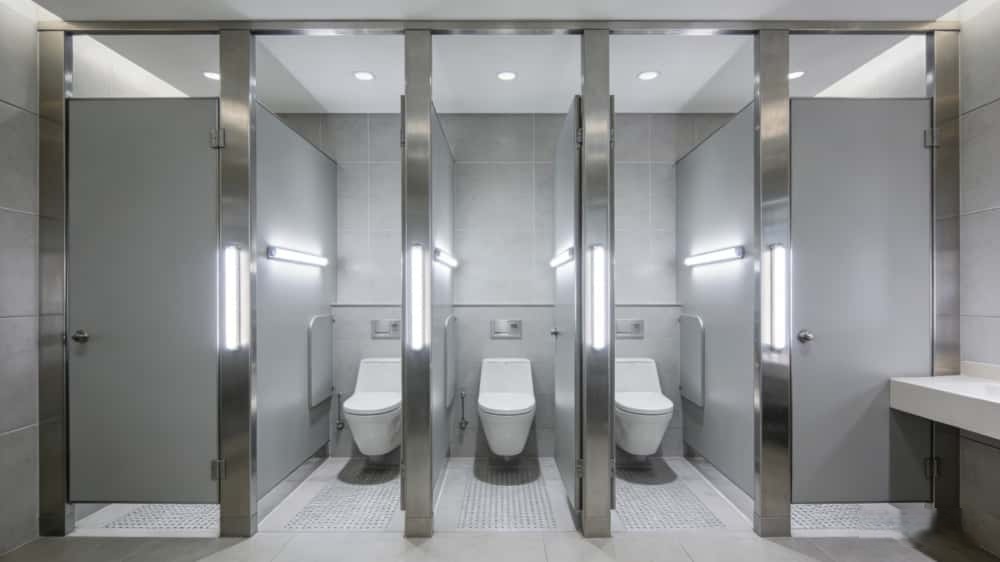
2. How These Trends Vary by Industry
Different commercial sectors emphasize specific partition attributes based on usage patterns, user expectations, and regulatory requirements.
Office Buildings
Office restrooms balance flow efficiency and employee comfort. In corporate environments, premium materials and privacy-focused Toilet Cubicle solutions enhance brand perception and contribute to wellness-oriented workplace design. Older facilities increasingly upgrade to floor-to-ceiling partitions to reduce noise and create a more dignified user experience.
Hospitality (Hotels & Restaurants)
In hospitality, every touchpoint speaks to brand identity—and restrooms are no exception. Full-height Bathroom Partition systems with rich finishes and custom colors can reinforce luxury branding. High-end materials and smart features also help hotels distinguish guest experiences, particularly in premium and boutique properties where differentiation matters.
Education and Institutional Spaces
Schools and universities prioritize safety, durability, and ease of upkeep. Here, vandal-resistant partitions with anti-graffiti surfaces and sturdy hardware accommodate heavy daily use. Privacy considerations are also becoming more prominent, especially in facilities that support diverse student populations.
In healthcare, increased emphasis on hygiene and accessibility drives adoption of antimicrobial surfaces and ADA-compliant partition designs.
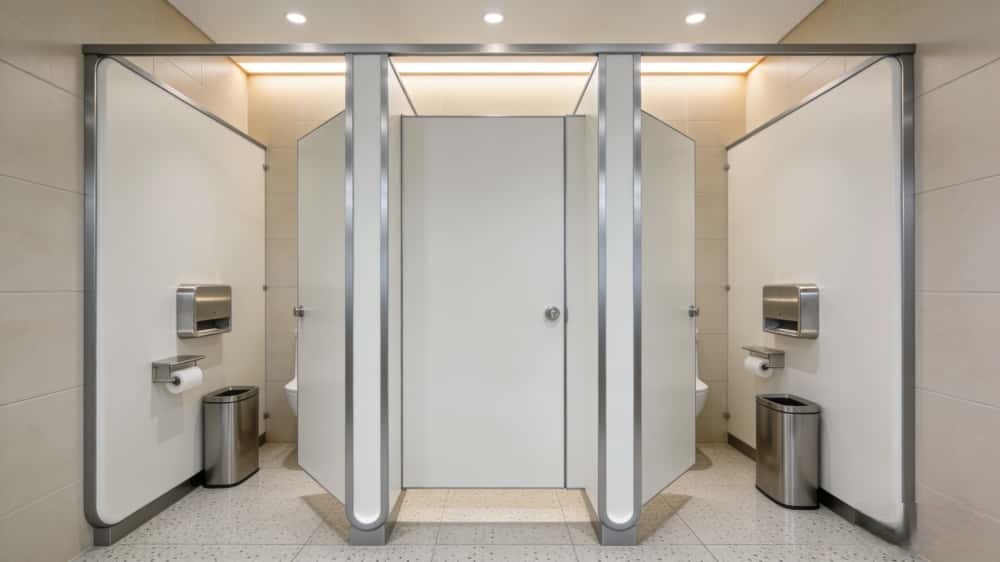
3. Design Inspirations from the U.S., Asia, and GCC
Across regions, commercial restroom design reflects both local aesthetics and global best practices.
United States
Leading corporate campuses and airports are upgrading public restrooms with full-privacy partitions and modern finishes that align with broader architectural themes. In many U.S. markets, top facilities are pairing sleek, durable materials with smart technology to prioritize cleanliness and efficiency.
Asia
Urban developments in Asia frequently incorporate bold, minimalist restroom partition designs that emphasize high-quality surfaces and efficient space use. Compact modular partitions and customizable panels suit mixed-use complexes and luxury retail environments.
GCC (Gulf Cooperation Council)
In the GCC region, premium hospitality projects often showcase luxurious restroom interiors with floor-to-ceiling privacy partitions, integrated ambient lighting, and rich material palettes. Whether in five-star hotels or high-end malls, partitions are selected not just for utility but as part of an immersive design language.
These global examples illustrate how advanced partitions can conform to cultural design values while delivering performance and longevity.
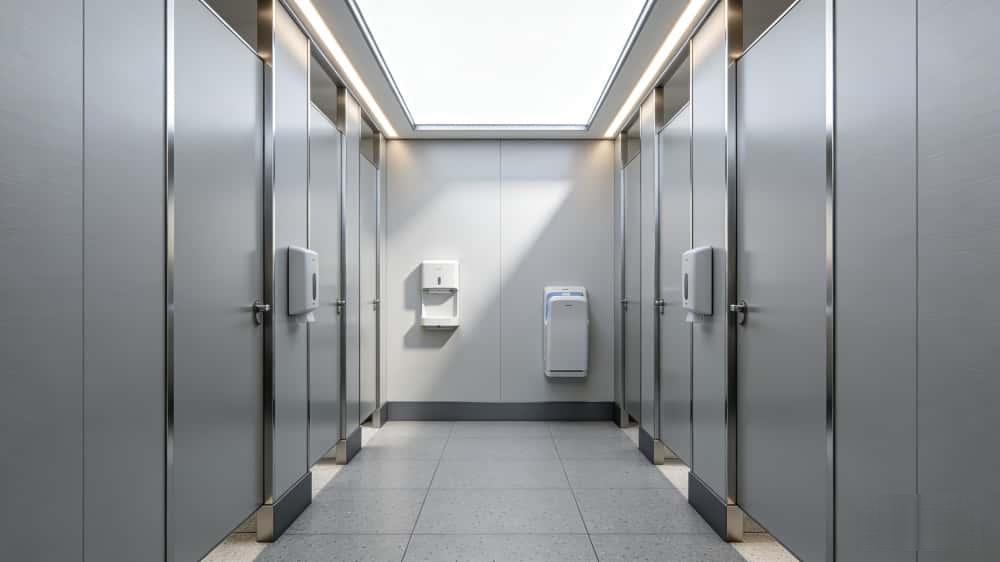
4. Future Forecast: Touchless, Smart Operations and Beyond
Looking forward, several trends are shaping the next wave of commercial restroom solutions.
Touchless Fixtures and Hygiene Solutions
Contactless technology has moved from optional to expected. Future applications will likely include automated stall doors, touchless latches, and integrated hygiene systems that operate seamlessly within restroom partitions.
Data-Driven Cleaning and Maintenance
Restroom management platforms that leverage real-time usage data will become increasingly important. Sensors embedded across fixtures and partitions can signal when specific stalls require cleaning, enabling optimized labor allocation and minimizing downtime.
Sustainability and Circular Design
Green building standards like LEED and WELL continue to influence material selection. Expect greater adoption of recycled and recyclable components in partition systems, contributing to eco-efficient operations and corporate sustainability goals.
Inclusive and Adaptive Designs
As facilities respond to evolving social needs and regulatory frameworks, restroom partitions will support more inclusive layouts and flexible configurations. This includes increased demand for gender-neutral spaces and universal design features that combine privacy with broad accessibility.
Why Choose Chenshou Tech’s Toilet Partitions?
In a competitive market driven by performance, user experience, and design flexibility, selecting the right partner is critical. Chenshou Tech’s Toilet Partitions stand out by combining:
Custom surface options tailored to project aesthetics,
Robust materials for high traffic and long service life,
Flexible configurations to support full-height privacy and modern hygiene standards,
Scalability for large commercial projects from offices to hospitality and institutional facilities.
By aligning with evolving trends and offering superior manufacturing expertise, we help businesses achieve restroom environments that are not only functional but also on the cutting edge of design and efficiency.
Post time: Jan-30-2026


