


When designing lightweight composite sandwich panels, selecting the optimal core material directly dictates structural stiffness, overall panel weight, fire compliance, and raw material budgeting. Engineers and composite fabricators frequently evaluate three dominant core classes: aluminum honeycomb core, Nomex® aramid honeycomb core, and structural rigid foam cores (PET, PVC, PMI, and PU). Each material exhibits distinct mechanical shear strengths, temperature limits, moisture resistance profiles, and manufacturing economics.
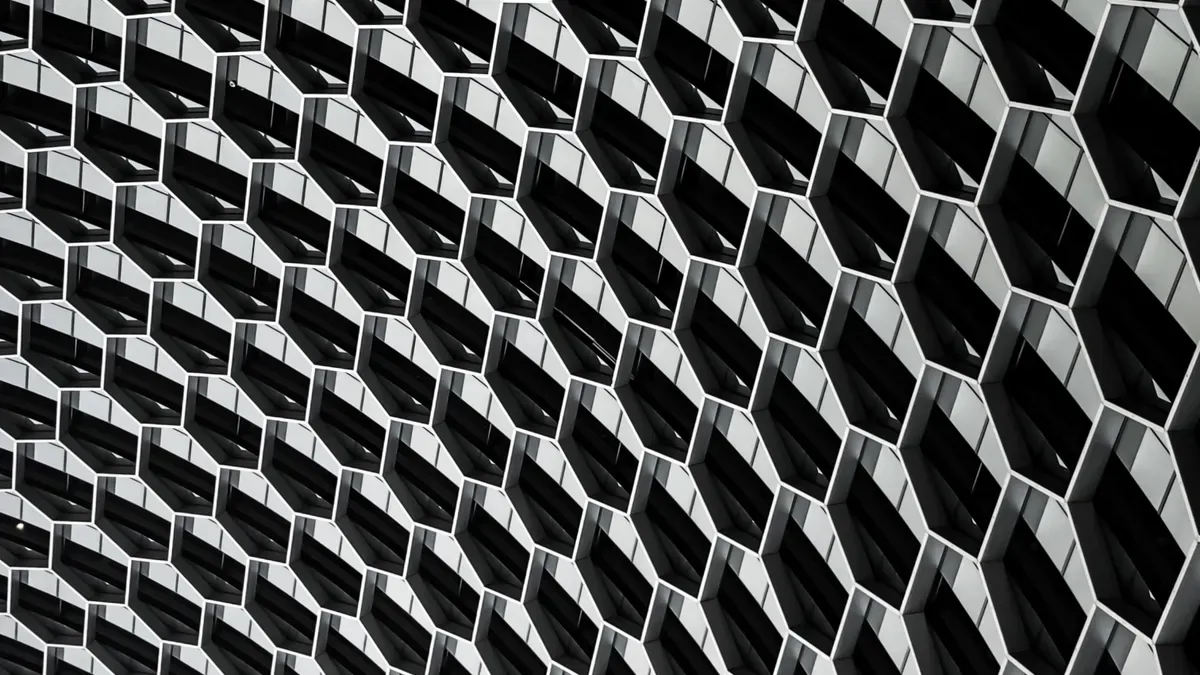
- Stiffness-to-Weight Leader: Aluminum honeycomb core provides the highest flatwise compressive and shear stiffness per unit mass at commercial-scale affordability.
- Aerospace Flexibility: Nomex® aramid honeycomb delivers superior formability over complex curvatures, dielectric insulation, and zero galvanic corrosion against carbon fiber skins, but carries a 4× to 8× price premium.
- Thermal & Acoustic Insulation: Structural foam cores (PET / PVC / PU) excel in thermal insulation (low thermal conductivity) and acoustic dampening, but exhibit lower shear strength and susceptibility to heat degradation during high-temperature autoclave cycles.
- Fire Safety Standards: Aluminum core is naturally Class A1 non-combustible (Euroclass EN 13501-1), releasing zero toxic fumes, making it ideal for public transit and architectural facades.
Head-to-Head Material Comparison
To assist project engineers in balancing performance against total landed cost, the table below highlights standard engineering metrics across commercial-grade aluminum core, aerospace-grade Nomex, and structural PET/PVC foams:
In-Depth Analysis of Each Core Type
1. Aluminum Honeycomb Core: Structural Stiffness & Non-Combustible Efficiency
Engineered from high-yield AA3003 or AA5052 aluminum alloys, aluminum honeycomb structures offer the highest shear modulus and flatwise compressive strength relative to their light weight. Because the core consists of metallic foil ribbons bonded with thermoset epoxy, it does not absorb moisture, decay, or outgas toxic smoke under intense heat. This makes it the undisputed material of choice for large architectural curtain walls, high-speed rail interior bulkheads, cleanroom partitions, and marine deck assemblies.
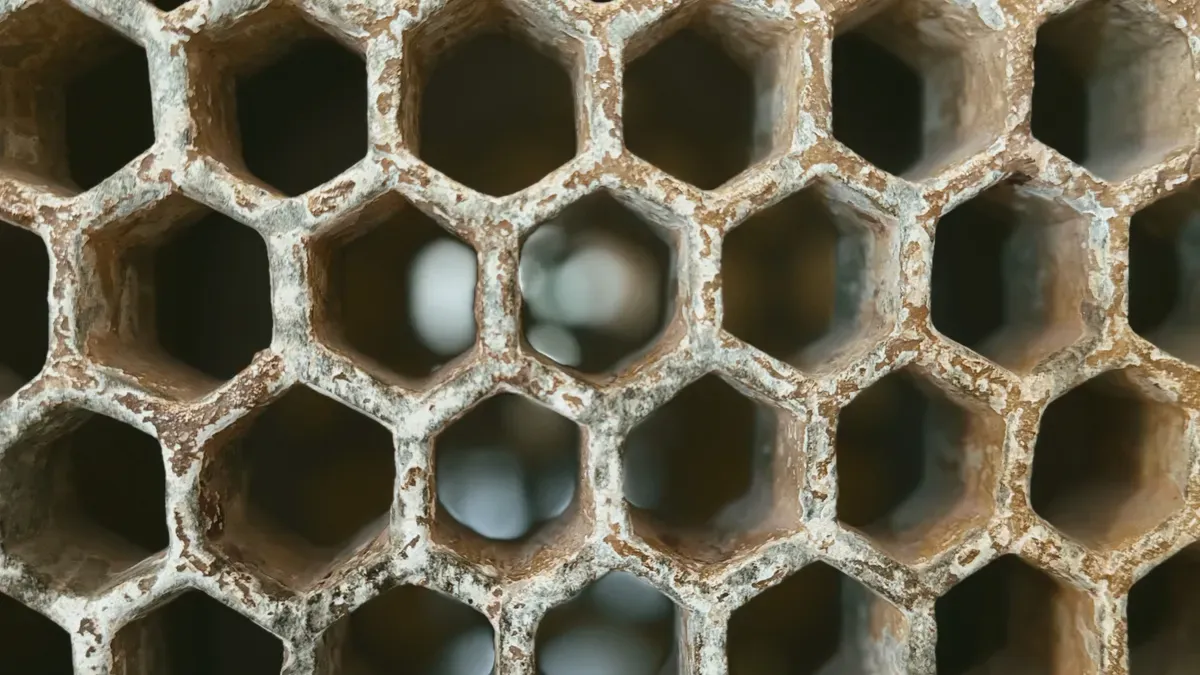
2. Nomex® Aramid Honeycomb Core: Aerospace Elasticity & Complex Contours
Nomex® cores are made from aramid fiber paper dipped in heat-resistant phenolic resin. Aramid honeycomb possesses exceptional impact recovery (elastic deflection without permanent cell buckling), radar transparency (dielectric properties for radomes), and zero galvanic corrosion potential when directly mated with carbon fiber face sheets. Its primary drawback is commercial cost: Nomex is significantly more expensive and requires specialized autoclave curing parameters.
3. Structural Foam Cores (PET, PVC, PU): Thermal Insulation & Direct Shaping
Closed-cell structural foams (such as recycled PET, cross-linked PVC, and rigid Polyurethane) provide continuous bonding surfaces and superior thermal resistance (R-values). Foams are widely adopted in wind turbine blades, boat hulls, and refrigerated truck bodies where thermal barrier insulation is required alongside structural support. However, under high structural loads, foams exhibit lower flatwise compressive modulus and risk creep deformation at temperatures exceeding 80°C.
Application Decision Matrix: How to Choose for Your Project
To determine the ideal core material for your manufacturing line, evaluate your project against these core criteria:
- Specify Aluminum Honeycomb Core if: You need maximum surface flatness across large panels (e.g., > 1500 × 3000 mm facades), strict Class A1 non-combustible certification, high shear stiffness under continuous wind/passenger loads, or optimal procurement cost per square meter.
- Specify Nomex Aramid Core if: The application involves compound 3D curved surfaces (such as aircraft wing fairings or radomes), direct carbon fiber prepreg co-curing where galvanic isolation is required, or specialized defense applications.
- Specify Structural Foam Core if: The composite panel serves as a primary thermal insulation barrier (refrigerated transport, cold storage facilities, boat hull flotation cavities) where thermal conductivity must remain below 0.035 W/(m·K).
Frequently Asked Questions (FAQ)
Q: Can aluminum honeycomb core cause galvanic corrosion when bonded with carbon fiber skins?
A: Yes, direct contact between raw aluminum foil and conductive carbon fiber in the presence of moisture can induce galvanic reactions. However, this is easily eliminated by applying a thin dielectric barrier layer (such as a single ply of glass fiber prepreg or an insulating structural adhesive film) between the core and the carbon skin.
Q: How does the flatwise compressive strength of aluminum honeycomb compare to PET foam?
A: At identical densities (e.g., 60–80 kg/m³), an aluminum honeycomb core provides roughly 2.5× to 4× higher flatwise compressive strength and compressive modulus than closed-cell PET structural foam, offering superior resistance against point-loading deflection.
Q: Which core material is easiest to recycle at the end of the product lifecycle?
A: Aluminum honeycomb core is 100% recyclable. When paired with aluminum face skins in all-aluminum sandwich panels, the entire structure can be melted down and reprocessed with minimal environmental footprint compared to thermoset aramid resins or cross-linked PVC foams.
Post time: Nov-12-2026


