


In composite sandwich panel manufacturing, delamination—the structural debonding between face sheets and the honeycomb core—represents the most critical quality failure. Whether appearing as localized blistering under direct solar heat, edge peeling under dynamic wind loads, or complete face separation over time, delamination ruins aesthetics and compromises structural integrity. Achieving a permanent, fatigue-resistant bond requires strict process control across surface pretreatment, structural adhesive chemistry, and temperature-pressure hot curing profiles.
- Surface Energy Threshold: Aluminum skins and foil core must achieve a surface tension ≥ 38 dynes/cm through chemical degreasing, silane conversion, or plasma treatment to prevent adhesive dewetting.
- Adhesive System Selection: Thermosetting two-component epoxy film adhesives provide superior high-temperature creep resistance (−40°C to +120°C) and flatwise tensile strength compared to thermoplastic or moisture-cure PU adhesives.
- Pressure Calibration: Lamination pressure must be held within 0.15–0.35 MPa. Excessive pressure crushes micro-foil cell walls, while insufficient pressure prevents proper meniscus fillet formation.
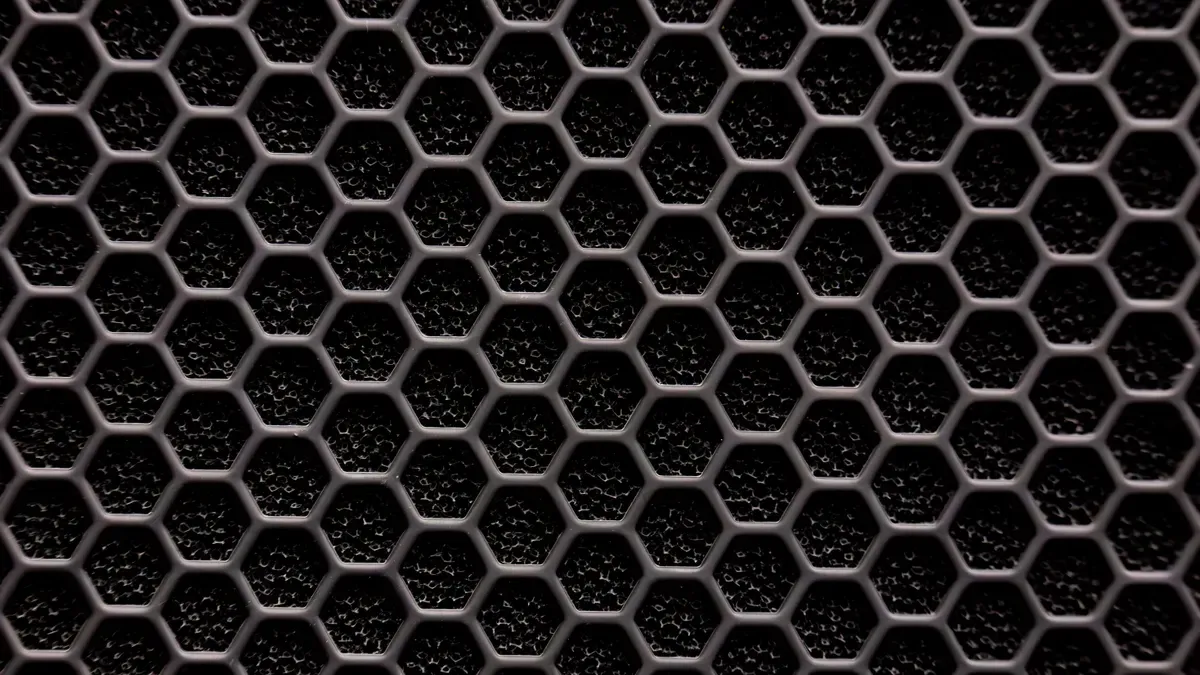
- Degassing with Perforated Core: Specifying micro-perforated aluminum honeycomb core allows trapped air and volatile gases to vent during hot pressing, eliminating solar thermal blistering.
Root Causes of Honeycomb Sandwich Delamination
Delamination rarely occurs due to a single isolated defect; rather, it stems from sub-optimal interactions between the metal substrate, the adhesive film, and the thermal curing cycle:
1. Rolling Oil Contamination & Weak Boundary Layers
Raw aluminum coils leave the rolling mill coated in residual lubricants and unstable natural oxides. If laminated without proper degreasing, the adhesive bonds to this weak lubricant layer rather than the base metal, resulting in cohesive failure under low peel stress.
2. Trapped Volatiles & Thermal Outgassing (Blistering)
During hot-press lamination, moisture and chemical volatiles vaporize inside closed honeycomb cells. If impermeable solid core is used without a venting path, the expanding gas creates internal pressure pockets. When exterior architectural facade panels absorb summer solar radiation (> 70°C), this trapped air expands further, forcing the skin away from the core and causing visible blisters.
3. Excessive Lamination Pressure (Core Wall Crushing)
Applying excessive hydraulic press pressure to ensure flatness can inadvertently buckle the thin aluminum foil edges (0.03–0.08 mm). Once the top edge of the cell collapses laterally, the contact area between the adhesive fillet and the foil is destroyed, creating localized void zones prone to premature peeling.
Adhesive Selection: Epoxy Film vs. Polyurethane (PUR) vs. Thermoplastic Film
Selecting the correct adhesive formulation is foundational to long-term peel strength. The table below details engineering performance benchmarks across the three primary adhesive systems:
*Note: Figures represent typical laboratory baseline values under standard coupon test geometries. Epoxy adhesive systems are strongly recommended for all exterior structural applications.
Step-by-Step Lamination Protocol to Prevent Debonding
To eliminate debonding risks in industrial production, adhere to this four-step manufacturing protocol:
- Step 1: Chemical Degreasing & Surface Pretreatment: Pass aluminum face sheets through an alkaline degreasing bath followed by silane conversion coating or light mechanical abrasion. Verify that surface Dyne levels consistently measure ≥ 38 dynes/cm.
- Step 2: Meniscus Fillet Formation: Ensure the adhesive film thickness and resin flow characteristics allow the melted adhesive to climb 0.5–1.0 mm up each vertical cell wall during curing. This “fillet meniscus” increases the physical bonding area by up to 300% compared to flat contact.
- Step 3: Multi-Stage Temperature & Pressure Ramp: Maintain hot-press curing pressure between 0.15 and 0.35 MPa. Follow a ramp-soak-cool profile: raise temperature gradually to the activation point (e.g., 140°C–160°C for epoxy), maintain for 15–20 minutes, and cool down under pressure below 60°C to prevent residual thermal warping.
- Step 4: Specify Micro-Perforated Core for Degassing: Use laser-perforated or pin-punctured honeycomb foil. These micro-apertures allow interconnected airflow across all cells, enabling volatile outgassing during hot pressing and pressure equalization in field service.
Quality Assurance & ASTM Verification Testing
Following panel assembly and panel installation best practices, factory QA teams should validate bonding strength against rigorous ASTM composite standards:
- ASTM C297 (Flatwise Tensile Strength): Square test blocks glued to both panel faces are pulled apart perpendicularly. The panel must achieve ≥ 1.5 MPa, with the failure mode occurring inside the honeycomb core rather than at the adhesive-skin interface.
- ASTM D1781 (Climbing Drum Peel Test): Measures the peel resistance of face skins stripped from the core. Standard exterior specifications require a minimum peel torque of ≥ 45 N·mm/mm.
- Thermal Shock & Humidity Cycling: Panels undergo 50+ cycles between −40°C and +80°C at 95% relative humidity to confirm zero bond degradation over simulated multi-year weather exposure.
- Ultrasonic NDT Scanning: Non-destructive ultrasonic testing checks for internal unbonded voids, ensuring 100% surface cohesion prior to dispatch.
Frequently Asked Questions (FAQ)
Q: Why do exterior aluminum honeycomb panels blister under intense summer sunlight?
A: Blistering is caused by expanding trapped air or moisture inside non-perforated honeycomb cells combined with weak adhesive peel strength. When dark-colored facades reach 70°C+ in sunlight, internal gas pressure pushes the skin outward at points where the adhesive bond is weak.
Q: Does micro-perforating the aluminum honeycomb foil reduce its compressive strength?
A: No. Micro-perforations (typically 0.2–0.5 mm pinholes) allow air venting without altering the vertical wall buckling stability or ASTM C365 flatwise compressive strength of the honeycomb matrix.
Q: What is the minimum recommended surface Dyne level for aluminum skins before lamination?
A: For structural epoxy bonding, aluminum face sheets should maintain a surface tension of at least 38 dynes/cm (optimally ≥ 42 dynes/cm) measured via dyne test pens, ensuring full resin wetting and eliminating rolling oil barriers.
Post time: Nov-16-2026


