


Honeycomb cores are changing modern architecture by offering new possibilities for both facades and interior spaces. Chenshou Tech’s Aluminum Honeycomb Core stands out as an architectural honeycomb core because it is lightweight, strong, and moisture-resistant.
- The hexagonal cell structure improves thermal comfort and sound insulation, helping to reduce heat transfer and dampen noise.
- Panels support better indoor air quality and are environmentally friendly.
Fire safety and recyclability make these materials a smart choice for sustainable design.
Understanding Honeycomb Cores
Structure and Materials
Honeycomb cores use a geometric pattern that looks like a honeycomb. This pattern creates many small hexagonal cells. Each cell acts like a pillar, helping to spread loads across the panel. The design increases strength and stiffness while keeping the material light.
Different materials are used to make honeycomb cores. The choice depends on the application and desired properties. Here is a table showing common materials and their advantages:
| Material Type | Advantages | Applications |
|---|---|---|
| Aluminum Honeycomb | Exceptional strength, stiffness, lightweight, customizable cell size | Aerospace, construction, industrial |
| Paper Honeycomb | Low cost, lightweight, environmentally friendly, adequate compressive strength | Furniture, doors, partitions, packaging |
| Thermoplastic Honeycomb | Lightweight, moisture and chemical resistance, good energy absorption | Marine components, automotive interiors, building panels |
Aluminum honeycomb cores, like those from Chenshou Tech, are popular in architecture. They offer high strength and resist moisture. Paper honeycomb is used for interior elements. Thermoplastic honeycomb works well in places that need chemical resistance.
Key Properties for Architecture
Honeycomb cores have several important properties that make them useful in buildings:
- Lightweight design reduces structural load and simplifies installation.
- High strength-to-weight ratio allows panels to cover large areas without bending.
- Excellent thermal insulation helps keep buildings energy efficient.
- Superior sound insulation improves comfort in indoor spaces.
The hexagonal cell structure increases both torsional and flexural stiffness. Laboratory tests show that honeycomb panels can withstand impacts at high speeds, much better than traditional materials. The panels absorb energy during impacts, making them safer for use in buildings.
A table below highlights some structural advantages:
| Structural Advantage | Description |
|---|---|
| Enhanced Bending Stiffness | Increased resistance to bending for structural use |
| Energy Absorption Capabilities | Effective energy absorption during impacts |
| Controllable Mechanical Properties | Tailored for specific architectural needs |
Honeycomb cores are used in architectural panels, insulation, and modular wall systems. Their unique structure and material choices make them a smart solution for modern architecture.
Facade Applications of Honeycomb Cores
Lightweight Cladding
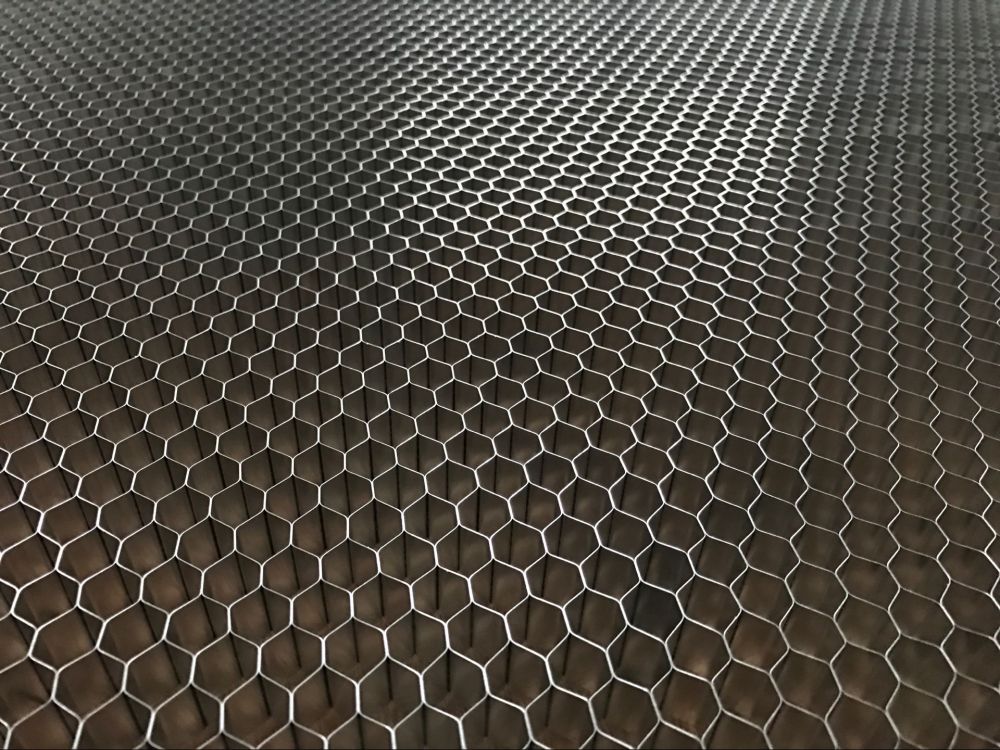
Lightweight cladding is important in modern architecture. It reduces the load on building structures and makes installation easier. Honeycomb cores are a popular choice for cladding panels because they combine low weight with high strength. Chenshou Tech’s Aluminum Honeycomb Core is a leading example. Its hexagonal cell structure gives each panel excellent rigidity while keeping it much lighter than traditional materials.
The following table shows how honeycomb core panels support different architectural needs:
| Feature | Description |
|---|---|
| Lightweight Material | Honeycomb sheets are significantly lighter than traditional materials, facilitating easier handling and installation. |
| High Strength-to-Weight Ratio | The hexagonal structure provides excellent load-bearing capacity, ensuring structural integrity while minimizing material use. |
| Design Flexibility | These panels can be easily customized in shape, color, and size, allowing for a wide range of innovative designs. |
Chenshou Tech’s panels also resist moisture and corrosion. This makes them suitable for buildings in humid or coastal areas. Their fire safety rating meets national standards, which is important for high-rise and public buildings.
Curtain Walls and Ventilated Facades
Curtain walls and ventilated facades are common in commercial and institutional buildings. These systems use panels that hang on the outside of the building frame. Honeycomb cores provide the strength and flatness needed for large, seamless surfaces. Chenshou Tech’s Aluminum Honeycomb Core offers superior fire resistance and moisture protection, which helps maintain the facade’s appearance and safety over time.
Long-term durability is a key concern for facade materials. Studies have tested honeycomb core cladding under different climate conditions. The table below summarizes some findings:
| Study Focus | Conditions Tested | Findings |
|---|---|---|
| Bonding Strength | Cyclic temperature changes (-20°C to 80°C) | Slight reduction in bonding strength after 1000 hours, but integrity maintained to meet industry standards. |
| Moisture Effect | High-humidity exposure | Higher rate of delamination compared to dry conditions. |
These results show that honeycomb core panels keep their strength and structure even after long exposure to temperature changes. Moisture resistance, like that found in Chenshou Tech’s panels, is important for long-term performance.
Energy Efficiency and Insulation
Energy efficiency is a top priority in building design. Honeycomb cores help reduce energy loss through the facade. Their structure creates air pockets that slow down heat transfer. This keeps indoor temperatures stable and lowers heating and cooling costs.
Key benefits of honeycomb core curtain walls and ventilated facades include:
- Honeycomb core curtain walls provide effective thermal insulation, which reduces heat loss and maintains comfortable indoor temperatures.
- The use of aluminum composite panels with honeycomb cores enhances insulation performance, contributing to energy efficiency.
- Ventilated cavities allow for air movement, further mitigating heat transfer and moisture buildup, which supports energy savings.
Chenshou Tech’s Aluminum Honeycomb Core also offers excellent sound insulation. This improves comfort for building occupants by reducing outside noise. The panels are easy to install and can be removed or replaced without damaging the building structure. This makes them a flexible choice for both new construction and renovation projects.
Tip: Choosing honeycomb core panels for facades can help architects achieve both creative designs and high building performance.
Honeycomb cores are transforming facade design. They offer strength, safety, and energy savings while supporting a wide range of architectural styles.
Interior Uses of Honeycomb Cores
Partition Walls and Panels
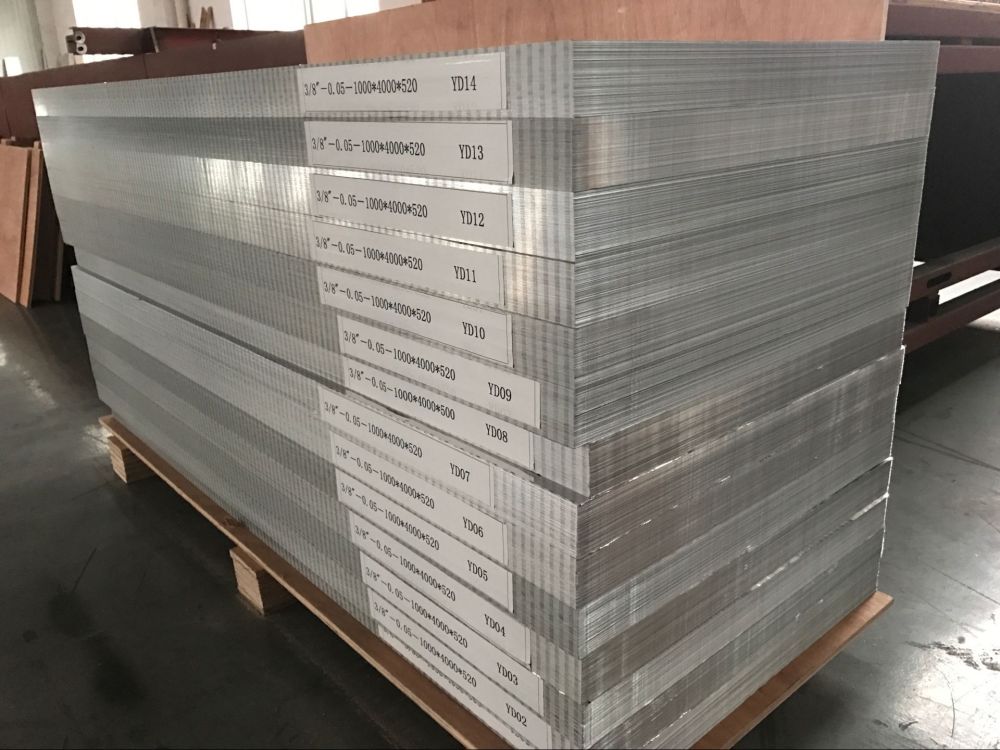
Partition walls and panels play a key role in shaping interior spaces. Many architects choose honeycomb cores for these applications because they offer both strength and lightness. Chenshou Tech’s Aluminum Honeycomb Core stands out for its ability to reduce noise and improve comfort. The hexagonal structure absorbs sound waves and limits their travel through walls. This makes offices, schools, and hospitals quieter and more pleasant.
The table below shows how honeycomb core panels help with sound control in partition walls:
| Benefit | Description |
|---|---|
| Sound Absorption | Honeycomb panels convert sound waves into heat, effectively reducing sound transmission. |
| Noise Reduction Coefficient (NRC) | Achieves up to 0.95, indicating high effectiveness in noise reduction. |
| Applications | Used in offices, schools, and hospitals to create quieter environments. |
Thermal insulation is another advantage. The air pockets inside the honeycomb core slow down heat transfer. This helps keep rooms at a steady temperature, which saves energy and improves comfort. Installation is simple because the panels are lightweight. Workers can move and fit them quickly, which lowers labor costs and shortens project timelines. Compared to traditional materials, honeycomb core panels also resist wear and last longer.
Ceilings and Acoustic Solutions
Ceilings made with honeycomb cores do more than cover pipes and wires. They help create a peaceful indoor environment. The unique structure of the honeycomb core acts as a maze for sound waves. This weakens noise and keeps it from spreading. The air pockets inside the core absorb sound energy, which lowers noise levels in busy spaces.
The table below explains how honeycomb core ceilings improve sound absorption and comfort:
| Property | Description |
|---|---|
| Honeycomb Structure Disrupts Sound Waves | The honeycomb core acts as a labyrinth for sound waves, weakening them and reducing noise transmission. |
| Sound Wave Absorption | Air pockets within the honeycomb core absorb sound energy, lowering noise levels inside buildings. |
| Reduction of Noise Reflection | The structure minimizes noise reflection, creating a quieter indoor environment. |
| Prevention of Air Movement | Sealed honeycomb cells restrict air movement, enhancing sound insulation. |
| External Noise Isolation | Panels block external noise from entering, providing a quieter indoor space. |
| Internal Sound Absorption | The honeycomb structure absorbs internal sounds, reducing echo and reverberation. |
| Improvement of Acoustic Environment | Minimizing both external noise penetration and internal sound reflection creates a balanced environment. |
| Perforated Panels | Perforated aluminum honeycomb panels enhance sound absorption, ideal for spaces requiring high sound quality. |
Many commercial buildings use honeycomb core ceilings to improve acoustics in conference rooms, theaters, and open-plan offices. These panels also help with temperature control by limiting heat flow between floors. The lightweight design makes installation fast and easy. Maintenance is simple because the panels resist moisture and stains.
Furniture and Decorative Elements
Designers use honeycomb cores in furniture and decorative elements to create modern, stylish interiors. Tables, shelves, and wall panels made with aluminum honeycomb cores are strong but easy to move. The panels can be shaped and finished in many ways, which gives designers freedom to create unique looks.
Honeycomb core furniture is not only attractive but also practical. The panels are recyclable, which supports green building goals. At the end of their service life, the aluminum can be recycled, reducing waste and environmental impact. The list below highlights the environmental and practical benefits:
- Aluminum honeycomb panels are made from a recyclable material.
- They can be recycled at the end of their service life.
- This recycling process helps reduce environmental impact.
- Honeycomb core panels are lighter than traditional materials, making them easier to handle.
- The installation of honeycomb panels is quicker, leading to reduced labor costs.
- Compared to plywood or MDF, honeycomb panels offer superior durability and resistance to wear.
Honeycomb cores fit well with modern interior design trends. Their clean lines and smooth surfaces match minimalist styles. The panels can be installed, removed, or relocated with little effort, which makes them ideal for flexible spaces.
Tip: Choosing honeycomb core panels for interiors can improve comfort, save energy, and support sustainable design.
Benefits of Honeycomb Cores
Strength and Weight Reduction
Honeycomb cores give buildings a strong structure without adding much weight. The hexagonal design spreads force evenly, which makes panels both rigid and efficient. This is important in construction because lighter panels reduce the load on the building’s frame. Lighter materials also make installation faster and easier for workers.
- The honeycomb structure balances strength and material use.
- Panels made with honeycomb cores are much lighter than solid metal sheets.
- These panels help lower the overall weight of a building, which can improve safety and reduce costs.
Note: Using lightweight panels can also help in areas where earthquakes or strong winds are a concern.
Sustainability and Efficiency
Sustainability is a key goal in modern architecture. Honeycomb cores support this goal by using materials efficiently and reducing waste. Life cycle assessments for honeycomb panels, such as those made from upcycled paper, show that these products have a lower environmental impact compared to traditional materials. These assessments follow strict standards and look at every stage, from making the panels to recycling them at the end of their life.
Honeycomb panels also improve energy efficiency. Their structure traps air, which helps keep buildings warm in winter and cool in summer. This reduces the need for heating and cooling, saving energy and lowering utility bills.
Design Flexibility and Aesthetics
Architects value honeycomb cores for their design options. Panels can be paired with clear, frosted, or colored glass to create different looks. Backlighting can highlight the honeycomb pattern at night, making a building stand out. Designers can also adjust the opacity and color of panels to create private zones without using solid walls. This keeps spaces open and bright while still giving privacy.
Honeycomb cores allow for creative shapes and finishes, making them a favorite for modern, stylish buildings.
Design Considerations
Material Selection and Compatibility
Choosing the right material for architectural panels is important. Each project has different needs. When selecting honeycomb core materials, architects and builders should consider several factors:
- Environmental factors such as moisture, fire resistance, electrical insulation, and temperature extremes can affect performance.
- Adhesive compatibility is important. The core material must work well with the adhesive to ensure a strong bond and prevent corrosion.
- Performance requirements like compressive strength, shear strength, fatigue resistance, and impact resistance must match the demands of the building.
Chenshou Tech’s Aluminum Honeycomb Core is designed to handle these challenges. It resists moisture and corrosion, making it suitable for many environments. The product also comes with matching alloy keels, which help with easy installation and ensure compatibility with different systems.
Fire Safety and Codes
Fire safety is a top priority in building design. Chenshou Tech’s Aluminum Honeycomb Core meets strict international fire safety standards. The table below shows how the product performs:
| Evidence Description | Details |
|---|---|
| Fire Performance | The Aluminum Honeycomb Core is a lightweight, non-combustible material that offers excellent fire performance. |
| Compliance with Standards | It meets and often exceeds fire safety requirements, utilizing fire-retardant treatments and non-combustible materials. |
| Fire Ratings | Achieves high fire ratings, such as A2 under the EN 13501-1 standard. |
| Regulatory Compliance | Undergoes rigorous testing per EN 13501-1 standards to ensure limited combustibility. |
| Certified Safety | Rigorously tested and certified by Thomas Bell Wright and IIT Delhi, ensuring compliance with global fire safety norms. |
These features make the panels safe for use in schools, hospitals, and high-rise buildings.
Maintenance and Durability
Maintenance and durability affect the long-term value of building materials. Chenshou Tech’s panels have a moisture-proof surface that prevents mildew and deformation. The panels are easy to clean and resist stains. Their lightweight design allows for repeatable disassembly and migration, which means panels can be moved or replaced without damage. This makes Honeycomb Cores a practical choice for projects that require flexibility and long service life.
Tip: Choosing materials that are easy to maintain and install can save time and money over the life of a building.
Real-World Examples
Architects around the world use honeycomb cores to solve design challenges and improve building performance. These materials appear in both facades and interiors. They help create strong, lightweight, and energy-efficient spaces.
One well-known project is called Grow. This building stands in New York City. The design uses a honeycomb-like structure. It focuses on sustainability and lets people change their spaces to fit their needs. The table below gives more details about this project:
| Project Name | Location | Features |
|---|---|---|
| Grow | New York City | Utilizes a honeycomb-like design, emphasizes sustainability, and allows for occupant customization. |
Chenshou Tech’s Aluminum Honeycomb Core has also been used in many real-world projects. These applications show the flexibility and benefits of this material. The following table lists some examples:
| Application Type | Notable Projects |
|---|---|
| Exterior facades | Jameel Art Centre, Dubai |
| Curtain walls | Nhow Rai Hotel, Amsterdam |
| Roofs | Various modern buildings |
| Ceilings | Used in hotels and offices |
| Interior partitions | Enhances aesthetics in restaurants |
These projects show how honeycomb cores can improve both the look and function of buildings. For example, the Jameel Art Centre in Dubai uses aluminum honeycomb panels for its exterior. This choice gives the building a modern appearance and helps protect it from heat and moisture. The Nhow Rai Hotel in Amsterdam uses honeycomb panels in its curtain walls. This makes the structure strong and energy efficient.
In hotels and offices, honeycomb panels are used for ceilings. They help control sound and keep the space comfortable. Restaurants use these panels for interior partitions. This adds style and makes the space flexible for different uses.
Note: Real-world projects prove that honeycomb cores are a smart choice for modern architecture. They offer strength, beauty, and energy savings.
Honeycomb Cores have changed the way architects design buildings. Chenshou Tech’s Aluminum Honeycomb Core leads with its strength, light weight, and green features.
- Structures using these panels can be up to eight times stronger for their weight than traditional materials.
- Lighter buildings save energy and lower installation costs.
- These panels offer better insulation and support sustainable construction.
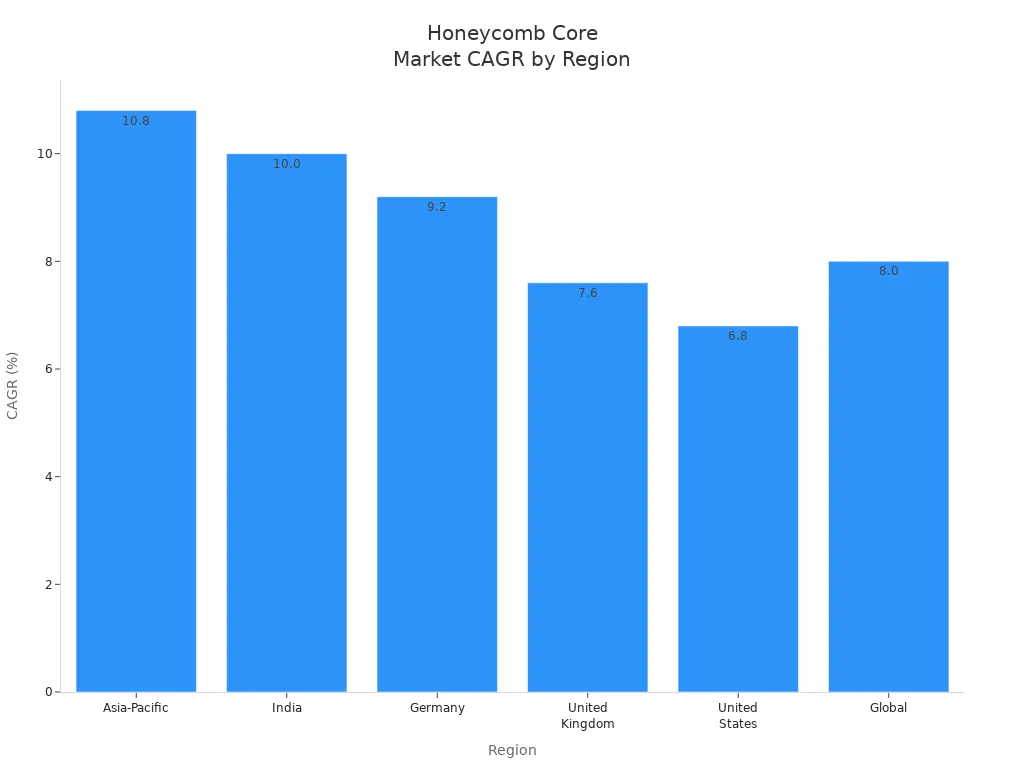
The market for honeycomb core technology is growing worldwide. Future buildings will use these materials for even more efficient and flexible designs.
FAQ
What is a honeycomb core panel?
A honeycomb core panel is a lightweight building material. It uses a hexagonal cell structure, like a beehive. This design gives the panel strength and stiffness while keeping it light.
Why do architects choose aluminum honeycomb cores?
Architects choose aluminum honeycomb cores for their strength, low weight, and durability. These panels resist moisture and fire. They also help save energy and support green building goals.
Can honeycomb core panels be recycled?
Yes! Aluminum honeycomb core panels are fully recyclable. At the end of their use, the aluminum can be melted down and reused. This helps reduce waste and supports sustainability.
Where are honeycomb core panels used inside buildings?
Honeycomb core panels appear in partition walls, ceilings, and furniture. They help control sound and temperature. Their light weight makes them easy to install and move.
Post time: Apr-17-2026


