


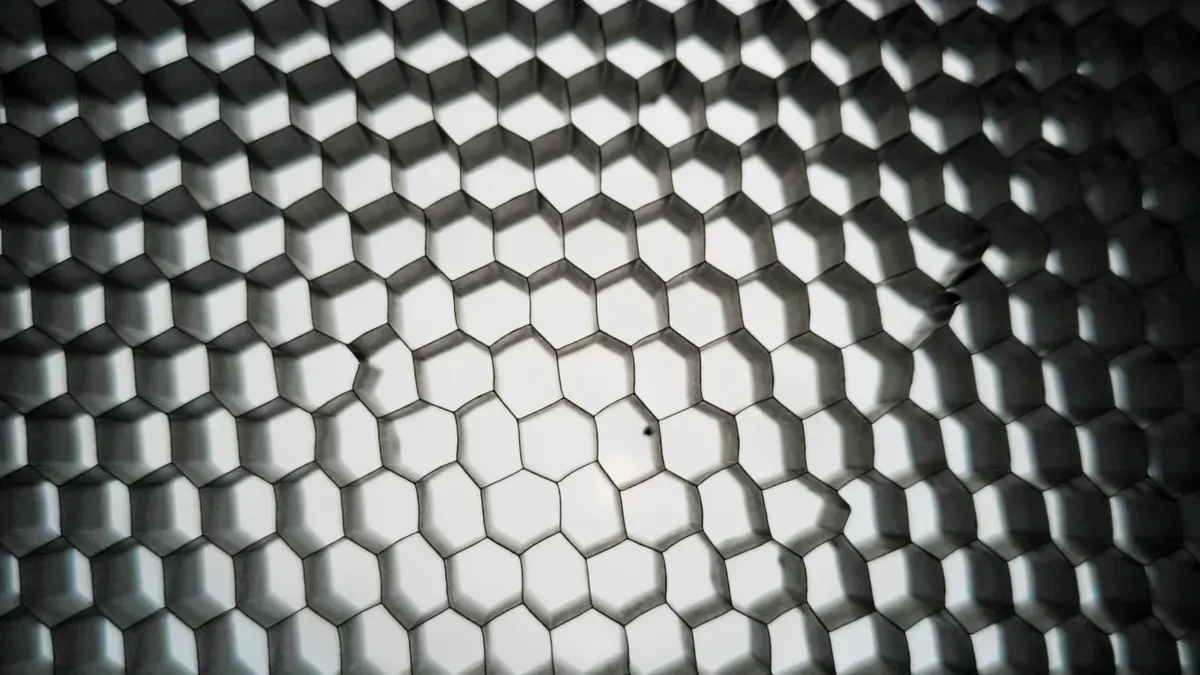
The pvc film honeycomb panel is an advanced composite material featuring thermally bonded film over a high-strength metal sheet with a cellular honeycomb core.
Commercial builders face severe structural challenges across demanding transit applications:
- Panel delamination degrades overall strength over time.
- Moisture exposure causes rotting, swelling, and surface warping.
- Excessive dead weight increases vehicle energy consumption, whereas a 10% reduction in vehicle weight yields a 6%–8% improvement in fuel economy.
CHEONWOO manufactures reliable laminated panels to resolve these industry problems. As a trusted industry leader, CHEONWOO produces custom aluminum honeycomb panel solutions. Our lightweight honeycomb panels deliver exceptional longevity for modern installations.
Key Takeaways
- Hexagonal aluminum cores give these lightweight panels high structural strength and impact resistance.
- Thermally bonded PVC surfaces block moisture and prevent mold in wet indoor spaces.
- Trapped air inside the cellular core provides great sound insulation and heat resistance.
- Transit systems use these light composite panels to reduce overall vehicle weight and save fuel.
Structure of PVC Film Honeycomb Panel
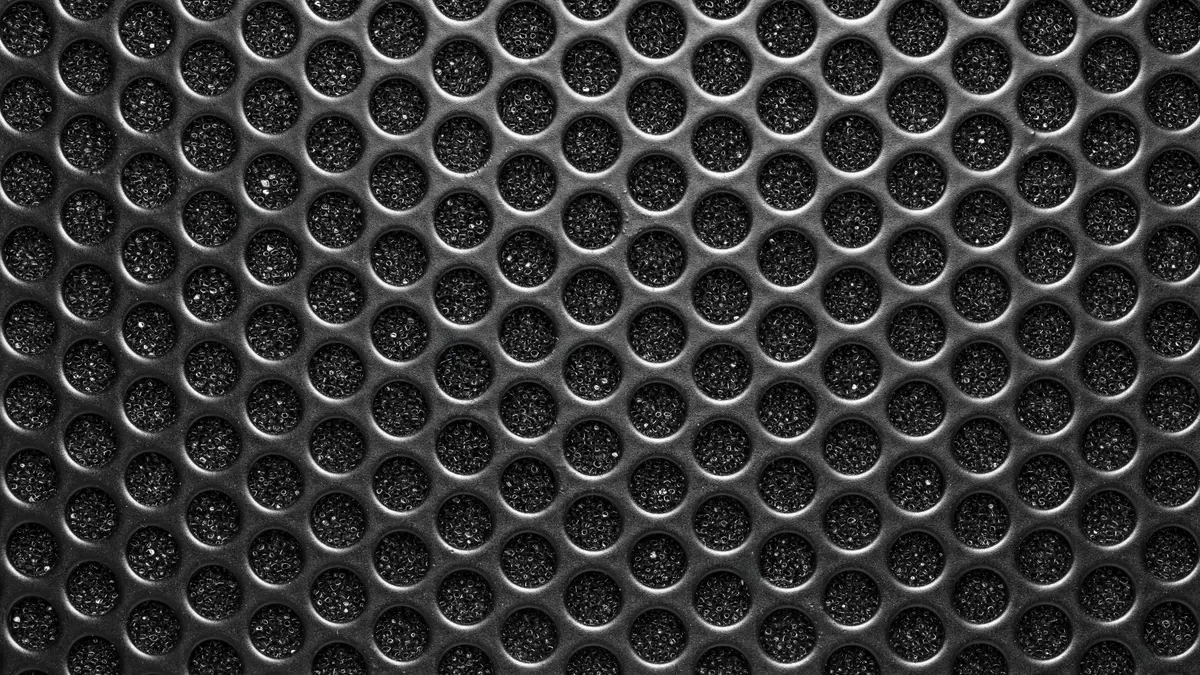
Metal Core and Aluminum Honeycomb Panel Structure
An aluminum honeycomb panel relies on a central honeycomb core bonded between two durable metal face sheets. This hollow structure features a lightweight design that maximizes mechanical strength without adding bulk. The inner geometry utilizes thin cell walls that operate in axial compression and shear. This architectural layout separates and stabilizes the face sheets against buckling. Consequently, honeycomb sandwich panels achieve exceptional bending stiffness and shear resistance.
The structural geometry uses classic hexagonal cells to handle severe external forces. This classic shape allows optimal load distribution throughout the entire panel body. In addition, hexagonal cells efficiently distribute stress by absorbing maximum energy. This action explains why cores with this specific geometry resist deformation so effectively during heavy impacts. Solid materials are several times heavier, but lightweight honeycomb panels provide equivalent structural strength. Engineers favor these aluminum honeycomb panel units for modern construction projects.
Protective PVC Film Surface Layer
CHEONWOO uses an advanced thermal bonding process to fuse the protective outer PVC film directly onto the metal substrate. Heat and pressure melt the materials together to create an unbreakable bond. This tight adhesion prevents peeling, warping, and blistering over long service lives. The surface layer covers the underlying aluminum honeycomb panel sheet, creating a smooth finish for every pvc film honeycomb panel. These coated panels resist daily impact and maintain absolute structural stability under shifting environmental conditions.
The outer PVC film layer provides exceptional weather resistance and corrosion protection for long-term use. This decorative surface protects the inner honeycomb core from UV exposure and continuous moisture penetration. Furthermore, the film delivers superior color retention across variable climates. Standard testing procedures confirm the incredible durability of these structural composite panels:
- Weather resistance tests include salt spray, boiling water resistance, and cold and hot water circulation.
- Impact durability tests include workability, bending properties, low temperature processing, and abrasion resistance.
Core Features of PVC Film Honeycomb Panel
Waterproof and Moisture Resistance
Solid decorative building products often absorb water in wet interior spaces. This moisture exposure leads to severe rotting, surface swelling, and physical material deterioration over time. The pvc film honeycomb panel provides total long-term protection against water damage. Advanced thermally fused outer layers seal the internal aluminum frame structure completely. Consequently, standing liquid cannot enter the internal cellular core structure at any time. Project managers select these composite solutions to replace traditional organic materials in high-moisture environments. The sealed edges stop environmental humidity from reaching inner core spaces during prolonged exposure. Standard laboratory testing procedures confirm this superior water barrier capability across all production batches.
Under ASTM D570 testing standards, the panel maintains a water absorption rate below 0.5% after 24 hours of total submersion. General product technical specifications under standard EN 317 demonstrate a water absorption limit of less than or equal to 0.05%. Specific production testing under EN 317 yields an even lower water absorption range between 0.02% and 0.04%. The following table compares key technical performance factors in high-humidity zones between synthetic composite panels and traditional solid wood materials.
| Performance Factor | PVC-based Laminated Honeycomb | Solid Wood |
|---|---|---|
| Moisture Absorption Rate | Less than 0.5% | 8–12%+ |
| Warping / Swelling Risk | Very Low | High |
| Mold Resistance | Excellent (ASTM G21 compliant) | Poor to Moderate |
| Expected Lifespan (humid zones) | 15–25 years | 5–10 years |
| Maintenance Frequency | Low (routine cleaning only) | High (sealing, refinishing) |
This non-combustible and moisture resistance core structure prevents mold growth according to ASTM G21 standards. High moisture interior zones benefit immensely from these honeycomb panels. Kitchen backsplash installations and custom cabinetry surrounds constantly encounter hot steam, grease splatter, and harsh cleaning agents. Basement spaces and below-grade interior rooms suffer from persistent ground moisture and high relative humidity. Sealed lightweight structural panels maintain structural strength across these difficult room settings. These protective qualities expand design choices in demanding indoor applications.
Surface Durability and Pollution Control
Surface quality dictates long-term material performance in active commercial facilities. CHEONWOO applies engineered outer films that offer zero odor and zero toxic off-gassing during daily service. The robust composite surface layer provides good impact resistance against heavy physical strikes. Heavy equipment strikes, moving carts, and frequent foot traffic do not dent or break the core honeycomb skin easily. This extreme surface toughness preserves aesthetic quality over decades of continuous operational use in crowded public venues.
The protective surface layer repels common industrial pollutants, oils, and chemical spills. Stains remain on the exterior surface without penetrating the outer film layer. Maintenance staff clean surface dirt easily using standard detergent solutions. Routine washing protocols remove surface contaminants quickly without scratching the protective finish. The smooth, non-porous face layer prevents dirt build-up across busy architectural spaces.
Building operators choose advanced honeycomb panels to optimize indoor environmental safety. Non-toxic production processes eliminate volatile chemical emissions entirely. Lightweight core materials support energy saving and environmental protection across modern construction projects. Low material dead weight reduces transport fuel usage during shipping. Long product life cycles lower total material consumption over extended operational periods. Facility owners minimize replacement costs while maintaining high environmental health standards. These versatile structural honeycomb panels deliver reliable daily service across diverse commercial applications.
Key Benefits for Modern Construction
Structural Advantages of Honeycomb Panels
Large commercial construction projects require composite building materials with high strength and good rigidity. Modern structural engineers select lightweight honeycomb panels to reduce overall dead load across tall buildings. The underlying aluminum honeycomb panel utilizes a lightweight and low density design that lowers stress on load-bearing frames. This engineering layout provides superior structural strength without adding unnecessary weight to the building envelope. As a result, architects can specify larger wall sections while maintaining total safety.
| Material | Relative Weight | Relative Stiffness |
|---|---|---|
| Solid Aluminum Sheet | High | Medium |
| Steel Plate | Very High | High |
| Aluminum Honeycomb Panel | Low | Very High |
These structural benefits simplify transportation and site handling during major installation phases. Construction crews save operational costs because workers maneuver these units easily without heavy cranes. Eliminating heavy support framing further reduces material costs for large architectural applications. Building owners choose durable honeycomb panels to ensure long-lasting structural stability.
Acoustic and Thermal Insulation
Interior spaces benefit greatly from superior sound insulation and heat insulation. The internal honeycomb core contains trapped air pockets that absorb acoustic waves efficiently. Core cell walls flex when sound waves strike the surface layer. This mechanical action converts sound energy into heat, achieving about 30 dB sound insulation for noise-sensitive interior rooms. Commercial facilities gain exceptional acoustic performance that enhances indoor comfort. High-traffic buildings rely on modern honeycomb panels to provide reliable sound insulation and heat insulation between adjoining office areas.
The non-combustible material design creates a reliable thermal barrier across modern wall partitions. Closed internal cells stop heat conduction to keep indoor temperatures stable throughout changing seasons. Combining this core with reflective surface layers reduces the operational load on heating and cooling systems. Facility managers lower long-term energy consumption across diverse interior applications. Using advanced honeycomb sandwich panels helps modern developments achieve green building goals. Project managers prefer these energy-efficient honeycomb panels for sustainable interior design projects.
Primary Industrial Applications
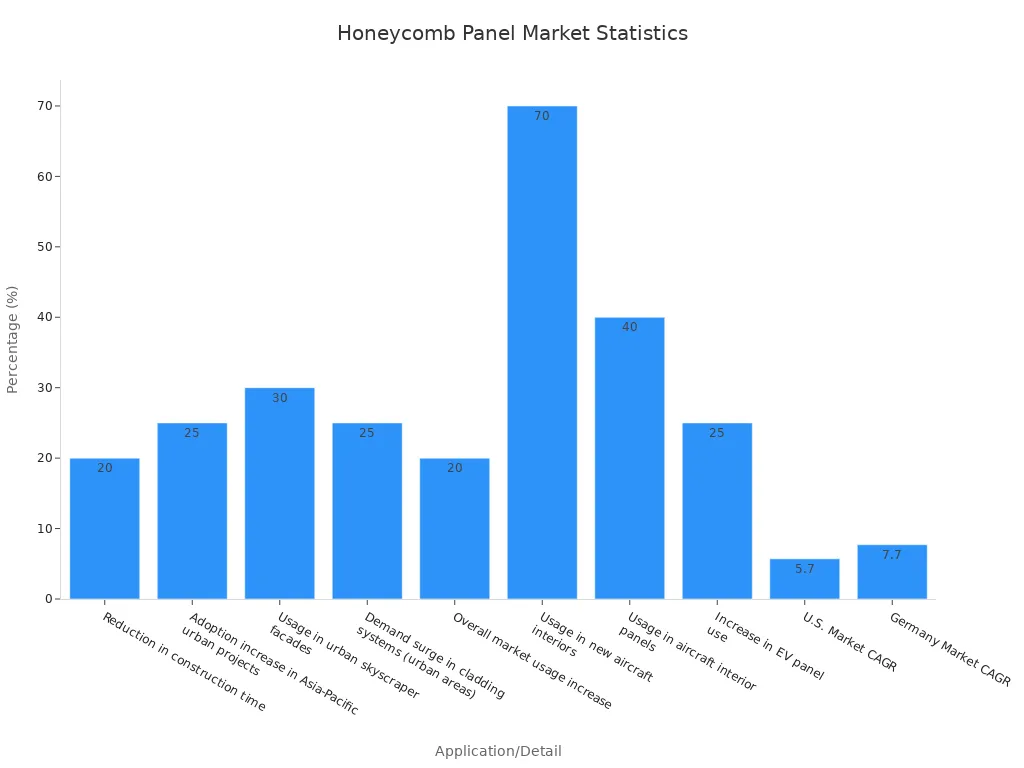
The global composite market uses advanced material solutions across modern building and transit industries. Building developers choose these specialized composite structures for high rigidity and weight efficiency. The United States market recorded a 5.7% CAGR in structural honeycomb panels usage. Meanwhile, the German market recorded a higher 7.7% CAGR driven by strong demand in high-end architecture and transit projects. These versatile materials support major industrial applications while improving project schedules.
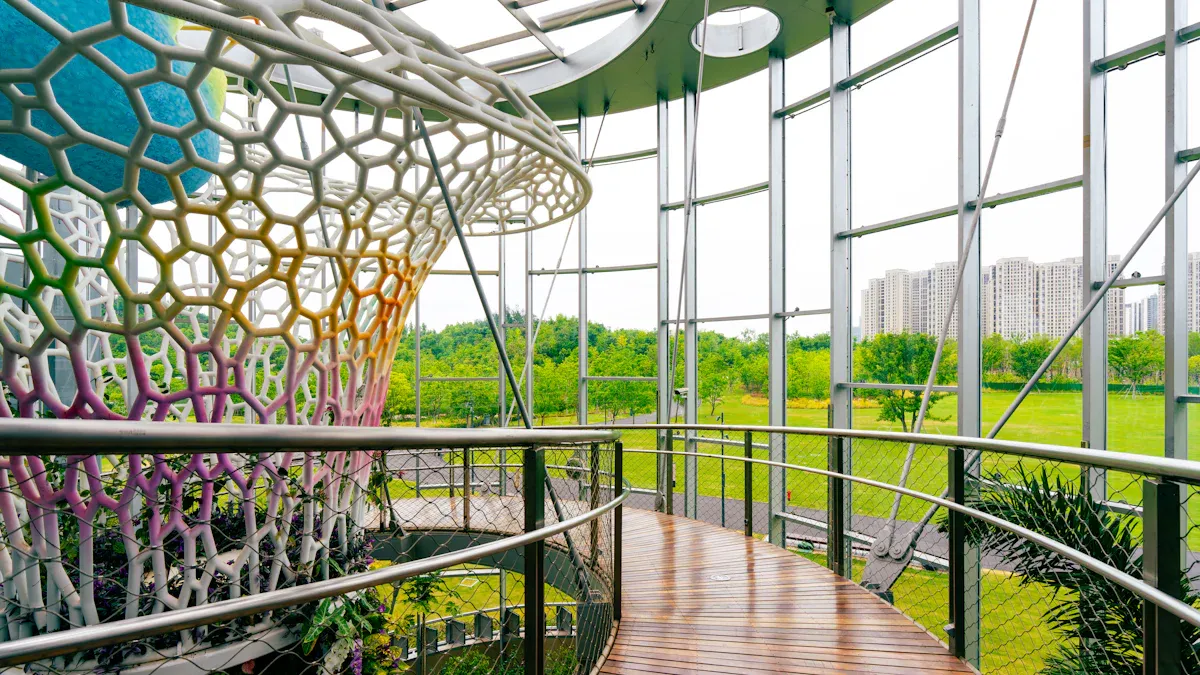
Architectural Interiors and Wall Cladding
Commercial interior construction represents the largest interior applications segment for these advanced products. Designers specify the durable pvc film honeycomb panel for decorative interior wall cladding, ceiling structures, room partitions, and specialized cabinetry. Modular panels accelerate installation timelines on site. Consequently, project managers reduce construction time by up to 20% compared to traditional building methods. Urban skyscraper facades utilize these cladding systems in 30% of new developments. Furthermore, adoption of these structures in Asia-Pacific urban projects increased by 25% for honeycomb panels.
Building codes set strict standards for structural safety and fire resistance across public spaces. Standardized testing confirms that composite materials meet demanding building code limits.
- Assemblies achieve Class A/A2 fire performance in hotel lobbies and circulation corridors.
- Non-combustibility tests under ASTM E136 confirm material stability at 750°C.
- Exterior wall assemblies satisfy NFPA-285 requirements for tall commercial structures.
Engineered joint systems manage thermal expansion across large surface areas. Slotted fixings decouple movement from anchors to preserve surface flatness. Lightweight properties reduce total structural dead load on building foundations. Architectural design teams specify honeycomb panels to maintain flat surfaces across demanding building applications. An aluminum honeycomb panel system delivers high rigidity. Interior panels gain improved fire safety, modern visual appeal, and lower overall maintenance costs.
Transportation Interiors and Transit Infrastructure
Transit vehicle manufacturers require robust composite materials to optimize operational efficiency and payload capacity. Commercial rail systems, aviation fleets, and electric vehicles incorporate honeycomb panels to enhance mechanical strength. Aircraft interiors use lightweight structures in over 70% of new builds, while specialized cabin interior panels account for over 40% of usage. Electric vehicle manufacturing recorded a 25% increase in structural panels adoption. Selecting an aluminum honeycomb panel allows engineers to replace heavy steel components. Substituting mild steel with lightweight aluminum composite layers achieves a vehicle weight reduction between 6% and 23规定%.
Lower vehicle mass directly enhances power efficiency and reduces total energy consumption during transit operations. Weight savings generate approximately 6 kg CO2 equivalent emissions reduction per kilogram of steel replaced. Municipal transit authorities lower exhaust emissions across daily fleet operations. Modern transit infrastructure relies on strong honeycomb sandwich panels for floor systems, passenger doors, and interior partitions. High strength-to-weight geometry resists continuous mechanical vibration from daily passenger transit. The unique cellular structural honeycomb core maintains dimensional stability under intense physical stress. These structural solutions contribute directly to energy saving and environmental protection across modern transport networks. Fleet panels maintain durability, while operators secure lower operating costs and superior vehicle performance across diverse industrial applications.
Custom Manufacturing with CHEONWOO
CHEONWOO operates as an industry-leading manufacturer of custom laminated structural materials. Our facility produces tailored dimensions, surface finishes, and technical specifications for diverse industrial applications. Project engineers can request custom sheet sizes, unique PVC surface textures, and specific core wall thicknesses. We engineer specialized composite structures to meet demanding performance criteria in modern building projects. Each manufactured sheet features an advanced thermal bond that locks the protective film layer directly to the metal sheet. This process guarantees long-term durability without surface peeling or edge separation.
Clients can select specialized core configurations depending on project scale and structural requirements. The lightweight cellular honeycomb structure provides exceptional rigidity across wide spans. CHEONWOO supplies these custom honeycomb panels for specialized architectural builds and transport projects. Production orders match client engineering drawings, custom color requirements, and OEM specifications. Our production lines manufacture high-strength honeycomb sandwich panels with uniform structural integrity. Every batch utilizes a precise internal honeycomb pattern to absorb daily physical stress.
Our factory provides complete OEM and ODM manufacturing capabilities with flexible ordering terms for global clients:
| Parameter | Value |
|---|---|
| Minimum Order Quantity (MOQ) | 200 square meters (80 units per pallet) |
| Lead Time (Order ≤ 500 m²) | 15 days |
| Lead Time (Order > 500 m²) | 20 days |
| Tooling Repeat Orders | 5–10 business days |
Small test samples remain available for client quality inspection upon direct request. First-article manufacturing runs require two to four weeks depending on order complexity.
CHEONWOO helps architectural and engineering teams optimize structural designs while maintaining tight project schedules and construction budgets. Our flexible custom manufacturing capabilities allow design teams to specify durable honeycomb panels for decorative interior wall systems, specialized ceiling grids, and heavy-duty transit enclosures. You can contact our direct sales representatives today at sellin@cheonwootech.com or sales@cheonwootech.com to request detailed product quotes, technical datasheets, or custom project specifications.
The pvc film honeycomb panel delivers high structural durability, lightweight strength, and design flexibility for demanding architectural applications. CHEONWOO uses thermal bonding to fuse protective surface layers directly onto an aluminum honeycomb panel core. This specialized production process prevents material delamination and warping in high-moisture environments.
Engineers specify high-performance honeycomb panels to ensure reliable service across commercial buildings. The unique cellular honeycomb structure absorbs physical impact, while the internal honeycomb geometry provides optimal stiffness. Additionally, custom honeycomb panels maintain flat surfaces across public facilities. The durable honeycomb matrix supports modern interior designs. Contact CHEONWOO sales specialists at sellin@cheonwootech.com or sales@cheonwootech.com to order custom panels and laminated panels today.
FAQ
Q How does a PVC film honeycomb panel prevent delamination?
CHEONWOO uses an advanced thermal bonding process. This process fuses the PVC film directly to the metal substrate under heat and pressure. The strong adhesion prevents peeling, blistering, and surface delamination over long service lives.
Q What core features make these panels suitable for high-moisture spaces?
The thermally fused outer layer creates a tight water barrier. Under ASTM D570 testing, the surface maintains a water absorption rate below 0.5%. This protection stops internal core rotting and surface swelling in wet environments like kitchens or basements.
Q Why do structural engineers favor composite panels for transit systems?
The cellular honeycomb core provides high structural strength with minimal weight. Substituting steel with these composite panels reduces transit vehicle mass significantly. This weight reduction enhances power efficiency and lowers overall exhaust emissions in daily transit infrastructure applications.
Q Can CHEONWOO manufacture custom panel dimensions?
Yes. CHEONWOO supplies custom honeycomb panels with tailored dimensions, PVC surface textures, and technical specifications. Designers can request specific core wall thicknesses and unique sheet sizes to fit precise architectural project requirements.
Post time: Aug-11-2026


